Essential Fish Habitat Frequently Asked Questions
What is the difference between an aquatic habitat and an ecosystem?
An aquatic habitat is the environment in which fish and other aquatic animals live, including living and non-living components that surround and affect their life (e.g., water quality, substrate, vegetation, and associated species, including prey).
An ecosystem is a community of organisms interacting with each other and their environment. This includes microbes, plants, animals, and humans, along with non-living components such as habitat, water, and sunlight.
What habitats are Essential Fish Habitat (EFH)?
Essential Fish Habitat (EFH) refers to the waters and substrates necessary for the spawning, breeding, feeding, or growth of federally managed fish species. Substrates on the seafloor include loose sediment and hard bottom, as well as the biological habitats that grow on them, (e.g., wetlands, seagrass, oyster reefs, or coral reefs). EFH is defined for each species or group of species managed under each Fishery Management Plan (FMP) and is based on the best scientific information available to identify the habitat necessary for a species’ life stages, regardless of management. For a detailed description of identified EFH for managed species, refer to the SAFMC EFH User Guide.
What is the EFH User Guide?
The SAFMC EFH User Guide is a document that provides a summary of the South Atlantic Fishery Management Council’s (SAFMC) EFH designations. It describes the habitats, explains where habitats are located, their importance for managed fish species, and provides information, such as life stage information, to support requirements of the Magnuson-Stevens Fishery Management and Conservation Act.

Common Acronyms:
- SAFMC – South Atlantic Fishery Management Council
- EFH – Essential Fish Habitat
- HAPC – Habitat Area of Particular Concern
- CHAPC – Coral Habitat Area of Particular Concern
- EBFM – Ecosystem-Based Fishery Management
- OHAPC – Oculina Habitat Area of Particular Concern
- NMFS – National Marine Fisheries Service
- FMP – Fishery Management Plan
- NOAA – National Oceanic and Atmospheric Administration
What is the Magnuson Stevens Act:
The Magnuson-Stevens Fishery Conservation and Management Act (MSA) is the primary law governing marine fisheries in U.S. federal waters. First passed in 1976, its primary goals are to prevent overfishing, rebuild depleted fish stocks, and support long-term economic and social benefits for commercial and recreational fishing. The MSA has been reauthorized twice, most recently in 2007 (as the 2006 Reauthorization Act); it mandated science-based annual catch limits and accountability measures to end and prevent overfishing.
Why is EFH identified?
EFH is the foundation for habitat conservation and the sustainability of federally-managed fisheries and stocks. Habitat can be a limiting resource for federally-managed species, and conserving EFH is critical to ensuring their sustainability into the future. Because of this, Fishery Management Councils are required to define and identify EFH to meet mandates under the 1996 reauthorization of the Magnuson-Stevens Act, which aims to protect the specific habitats necessary for fish spawning, breeding, feeding, or growth to maturity. Identifying EFH ensures that these areas are considered in federal agency actions, reducing or preventing adverse impacts from fishing, development, and pollution to maintain sustainable, productive fisheries.
What can Regional Fishery Management Councils do to protect EFH?
Regional Fishery Management Councils protect Essential Fish Habitat (EFH) by identifying and mapping these areas, implementing fishing gear restrictions, establishing time/area closures, and providing recommendations for non-fishing projects that may impact habitat. Under the Magnuson-Stevens Act, Councils must minimize to the extent practicable, the adverse effects of fishing on EFH.
How is EFH designated?
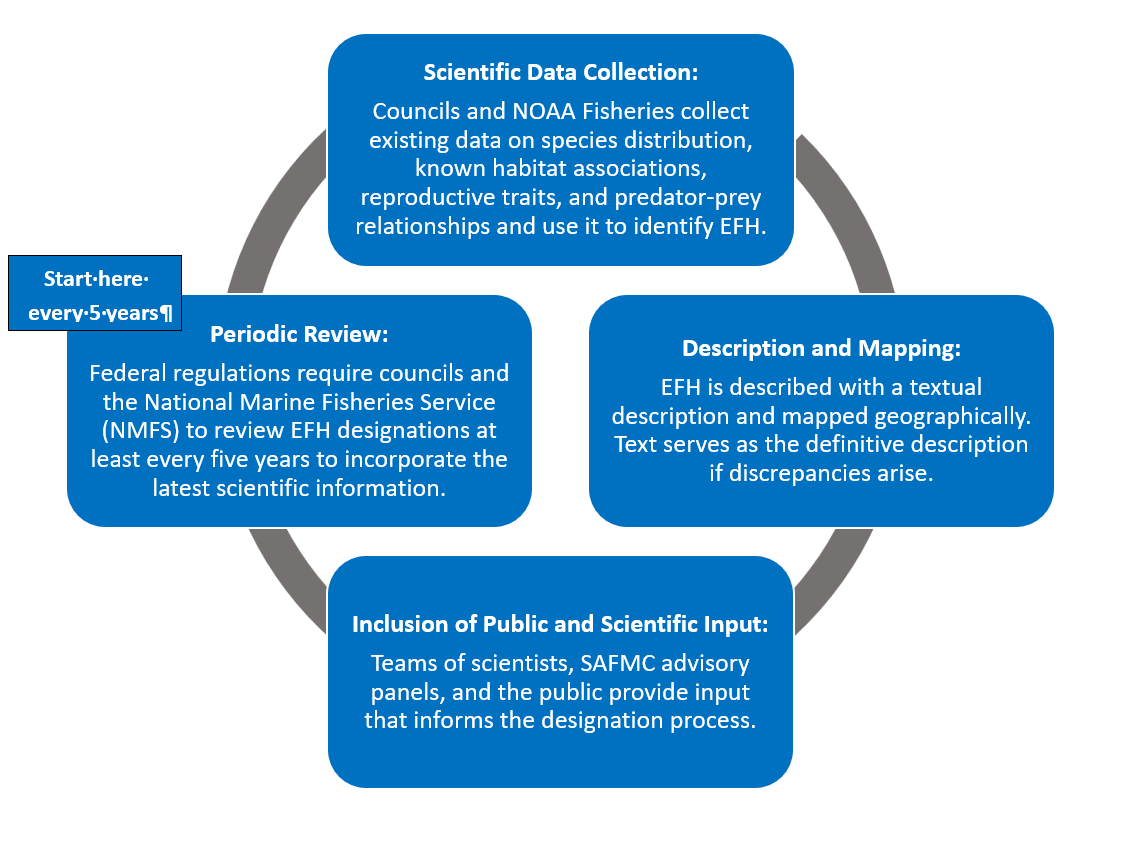
How does an EFH designation protect habitat?
The EFH designation allows the eight Regional Fishery Management Councils and NMFS to identify and conserve waters and substrate necessary to managed species for spawning, breeding, feeding, or growth to maturity. EFH protects critical ecosystems by requiring federal agencies to consult with NMFS on any actions—such as dredging or filling permit issuance—that may adversely affect these areas. This mandate under the Magnuson-Stevens Act also enables the restriction of fishing gear that can damage EFH and promotes habitat restoration and mitigation of environmental impacts.
What is an EFH consultation or an EFH assessment?
An Essential Fish Habitat (EFH) Assessment is a mandatory document prepared by federal agencies to evaluate the impact of a proposed project on habitats crucial for managed species’ spawning, breeding, feeding, or growth. It is required under the Magnuson-Stevens Act to initiate consultations with NMFS to avoid, minimize, or offset adverse effects on these habitats.
When EFH is identified, and regulations are enacted, who do the regulations impact?
EFH designation ensures that federal agencies that authorize, fund, or undertake actions that could harm habitats consult with NMFS before a project begins. Regulations to protect EFH may also impact stakeholders involved in activities that may adversely affect these habitats, such as developments or dredging.
How does an EFH HAPC designation affect commercial and recreational fishermen?
EFH (Essential Fish Habitat) and HAPC (Habitat Area of Particular Concern) designations do not immediately close areas to fishing, but they require fishery managers to evaluate the impacts of fishing gear. For both commercial and recreational fishermen, this can result in gear restrictions, seasonal closures, or modified practices to prevent habitat degradation.
Direct Impacts on Fishermen
- Gear Restrictions: To minimize adverse impacts on the seafloor or sensitive marine life, Councils may ban certain gear in specific zones. For example, the use of heavy bottom-tending trawls or dredges may be prohibited in coral or rocky reef HAPCs to protect structural habitats.
- Time/Area Closures: To protect fish during vital spawning or nursery stages, managers may implement seasonal or rolling closures in these defined habitats.
- Scrutiny of Non-Fishing Activities: While the focus is often on fishing, these designations give Regional Fishery Management Councils the power to push back on non-fishing activities—like offshore drilling, dredging, or coastal development—that could degrade fish habitats.
What are managed areas?
Managed areas are designated geographic zones in federal waters (3 to 200 nautical miles off the coast) from North Carolina through east Florida to conserve marine resources and fisheries. These areas include marine protected areas (MPAs), special management zones (SMZs), and gear-managed areas that restrict fishing gear types to protect specific habitats such as coral reefs and known spawning sites. Managed areas can apply additional regulatory tools beyond those available for EFH. For example, some managed areas may include naturally occurring, artificial bottom, or water column habitats. They may also prohibit harvest on seasonal or permanent time periods to achieve desired fishery management goals.
What is the difference between EFH, HAPC, CHAPC, and OHAPC?
Essential Fish Habitat (EFH) is all the waters and substrate necessary for managed species spawning, breeding, feeding, or growth to maturity.
A Habitat Area of Particular Concern (HAPC) is a subset of EFH designated as high-priority for conservation based on criteria such as ecological importance, rarity, sensitivity to degradation, or stress from development, dredging or fishing.
Coral Habitat Areas of Particular Concern (CHAPCs) are a specific type of HAPC designated for coral reefs and related habitats.
The Oculina Habitat Area of Particular Concern (OHAPC) is a specific example of a CHAPC, referring to the Oculina Bank off Florida’s coast. These deep-water reefs have received special protection due to their unique, sensitive, and ecologically important nature.
Can EFH designations extend across Council jurisdictions?
Yes, Fishery Management Councils may identify EFH across council boundaries. While councils have jurisdiction over specific geographic regions, the management of species and ecosystem-based approaches often requires cross-jurisdictional collaboration with other Councils and NOAA.
Does EFH extend beyond “federal waters”?
Yes, Essential Fish Habitat (EFH) extends beyond federal waters (typically 3–200 nautical miles offshore) to include state-managed coastal waters, estuaries, and rivers. While federal Fishery Management Councils operate primarily in federal waters, the Magnuson-Stevens Act allows them to designate EFH in any area necessary for a managed species’ life cycle, including state and nearshore waters.
Are there seasonal EFH designations?
Yes, Councils can define EFH during particular times of the year. These seasonal designations allow for targeted protection through federal consultations, such as restricting construction to seasons where species are not migrating or spawning in the project area. There are no seasonal designations currently in the South Atlantic.
Is EFH only designated for fish?
Essential Fish Habitat (EFH) is not designated exclusively for fish; it encompasses the aquatic habitat (waters and substrate) necessary for federally managed fish and invertebrate species (such as shrimp, crabs, and corals) to spawn, breed, feed, or grow to maturity. EFH protection of habitat for managed species may indirectly provide an ancillary benefit for non-fishery resources within the boundaries of designated EFH. Under the Magnuson-Stevens Act, EFH is identified for species managed under federal Fishery Management Plans. Under the Magnuson-Stevens Fishery Conservation and Management Act (MSA), “fish” is broadly defined to include finfish, mollusks, crustaceans, and all other forms of marine animal and plant life other than marine mammals and birds [16 U.S.C. 1802(12)].
What is Ecosystem-Based Fisheries Management (EBFM)?
SAFMC is striving to reach an ecosystem-based fisheries management approach. The EBFM approach manages fisheries holistically by focusing on the entire ecosystem to ensure the long-term health, resilience, and sustainability of marine resources. Traditional management focuses on single species outcomes. EBFM tools like management strategy evaluation and integrated ecosystem assessments can help integrate human and environmental components into management decisions.
Why are there FMPs for habitats like Coral and Sargassum?
FMPs are meant to ensure long-term health, sustainability, and productivity for fish stocks while supporting the fishing industry. Coral and Sargassum are both habitats that have historically been harvested and that provide shelter and support fish population health. By creating targeted management measures through the Coral and Sargassum FMPs, the Council helps ensure that the fish dependent on these habitats continue to thrive, and that the habitats themselves remain healthy and sustainable. For example, both the Coral and Sargassum FMP’s limit take of coral and sargassum, thus ensuring that there is no commercial harvest and the habitat remains where it is supposed to be for fish to utilize.