Resilient Fisheries Initiative and Projects support the development of more nimble and adaptive fisheries management processes and advice in the Southeast region by reviewing available information, identifying impactful change, and supporting the Council’s implementation.
East Coast Scenario Planning Initiative
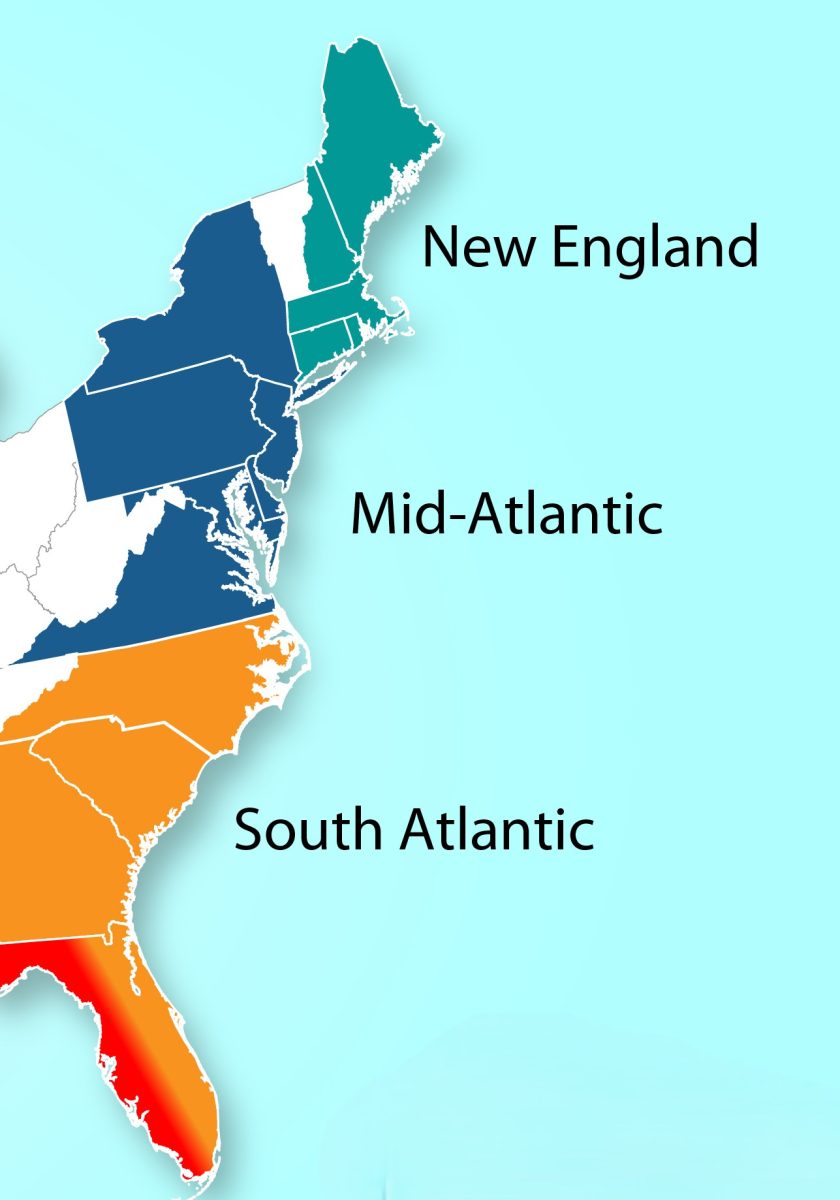
In 2021, the South Atlantic Fishery Management Council partnered with the New England and Mid-Atlantic Fishery Management Councils, the Atlantic States Marine Fisheries Commission, and NOAA Fisheries to undertake the East Coast Scenario Planning Initiative. Scenario planning is a strategic tool used to prepare for uncertain futures. Recognizing the many current and future management challenges, like shifting fish stocks and changing habitats, fishery management organizations along the U.S. East Coast undertook this effort to identify and plan for uncertainties that may impact the future success of U.S. fisheries. The process engaged hundreds of stakeholders throughout the region in the development of a scenario framework used to explore potential governance and management changes that may be beneficial under a range of future conditions. This effort produced a Potential Action Menu that provides management agencies with options to move toward more adaptive and resilient fisheries management and governance.
Another outcome of the Scenario Planning effort was the formation of the East Coast Coordination Group, which prioritizes and updates the Potential Action Menu each year. This leadership-level group works together to prioritize, estimate resource needs, and support coordinated implementation of the various actions that each organization undertakes. For more information on scenario planning, the Potential Action Menu, or the Coordination Group, visit the Mid-Atlantic Fishery Management Council webpage.
South Atlantic Resilient Fisheries Projects
In 2023 National Oceanic and Atmospheric Administration (NOAA) announced funding for the eight regional Fishery Management Councils to support Council efforts to develop and advance resilient fisheries management and implementation. The South Atlantic proposed four projects focused on addressing existing needs identified in the Council’s Research and Monitoring Priorities and implementing actions identified through the East Coast Scenario Planning efforts described above. In addition to the East Coast efforts, the Council is also working with NOAA’s Southeast Regional Office and the Gulf and Caribbean Councils to coordinate project efforts in the Southeast.
Evaluating Species Distribution and Habitat Changes in South Atlantic Fisheries
Using state-of-the-art spatiotemporal modeling techniques, this project will explore indicators of non-stationarity in the spatial distribution and habitat associations for the fish and fisheries managed under the Council’s Snapper Grouper, Coastal Migratory Pelagics, and Dolphin Wahoo FMPs. The outcomes will inform more resilient fisheries management and governance by updating descriptions of distributions and Essential Fish Habitat. This will also inform an evaluation of existing governance structures, potential changes in interjurisdictional governance, and implementation of more resilient management.
Anticipated Timeline: January 2025 – March 2027
Contractors: Dr. Jie Cao, North Carolina State University; Dr. Janet Nye, UNC Institute of Marine Science; Seungyeon Jade Hong, UNC IMS
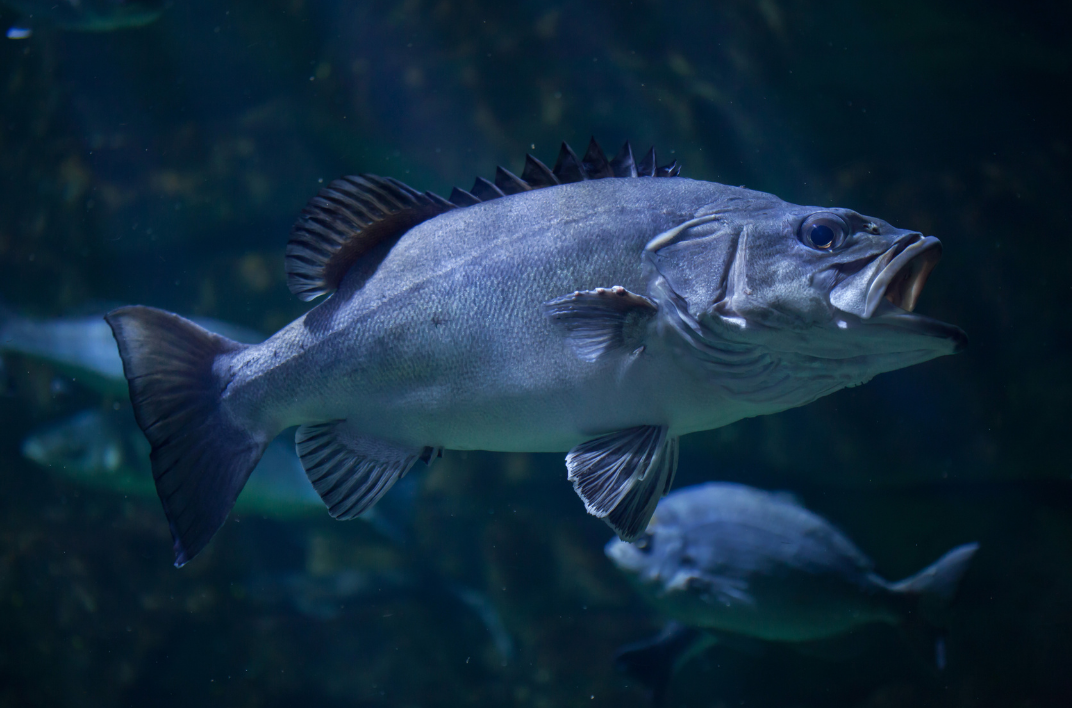
Using Adaptive Implementable Management (AIM) to Develop a Stakeholder-Driven Management Strategy for the Wreckfish Fishery
This project will apply an adaptive management technique called Adaptive Implementable Management (AIM) to guide a stakeholder-driven management development process for the South Atlantic wreckfish fishery. During this process contractors will work directly with managers and stakeholders to develop management recommendations robust to future uncertainty. Stakeholder engagement is being prioritized during the AIM process via interviews and stakeholder workshops planned throughout the project period. Using decision-support tools, the contractors will work directly with stakeholders to explore and compare various management measures and harvest control rules.
This project aims to enhance the Council’s responsiveness to changing fisheries and ecosystems by improving regulatory processes and governance structures. It will focus on three objectives: resolving regulatory bottlenecks, optimizing the Council’s committee structure and coordination, and developing a more robust risk policy framework. The study includes internal assessments and comparisons with other Councils to ensure recommendations reflect best practices and legal obligations under the Magnuson-Stevens Act, NEPA, and APA. Case studies of recent amendments will help illustrate challenges and opportunities. Stakeholder engagement is central, involving a wide range of Council and industry participants. The outcomes will provide strategies for more adaptive management in evolving ecosystems and regulatory contexts. Project outcomes and recommendations will be coordinated with the Ecosystem Information Review project.
Ecosystem Information Review and Strategy Development
This project aims to strengthen management outcomes by expanding the use of ecosystem information and collaborative research within the South Atlantic region. It will assess how all U.S. regional fisheries management councils utilize ecosystem data products and decision-support tools, provide comparative insights, and identify best practices and develop strategies for integration into SAFMC management processes. The project will also address practical implementation requirements, evaluate opportunities for cooperative data collection, and develop prototype ecosystem indicators tailored to regional needs. Project outcomes and recommendations will be presented in coordination with the Management Process Review.
Anticipated Timeline: August 2025 – September 2026
Communities Project Phase I: Place-Based Identification and Characterization of South Atlantic Fishing Communities
Phase I of the Communities Project is designed to build on the Council’s longstanding history of engagement with fishing communities by strengthening and refining its understanding of who those communities are and how they are affected by management decisions. This phase focuses on the place‑based identification and characterization of communities impacted by South Atlantic Fishery Management Council actions, using existing social, economic, and environmental data at a finer geographic scale than currently available. It examines communities’ connections to Council‑managed species and assesses vulnerabilities related to ecosystem change, such as sea level rise, storm impacts, and shifts in fish distribution. The resulting analysis, data products, and visual tools provide the Council with a clearer, more nuanced picture of fishing communities across the region, creating a strong evidence base to support more targeted outreach, communication, and management efforts in Phase II and beyond.
Anticipated Timeline: May 2026 – June 2027
Contractors: Edward Camp; Angela Collins; Bryan Fleuch; Joy Hazell; Michael Jepson; Kai Lorenzen; Andrew Ropicki; Jennifer Sweeney Tookes; Tracy Yandle (University of Florida)
Communities Project Phase II: Stakeholder Outreach and Communication Assessment and Strategic Plan Development
Phase II of the Communities Project focuses on turning the community knowledge developed in Phase I into a practical, relationship‑driven outreach and communication strategy for the South Atlantic Fishery Management Council. Building on identified fishing communities and their characteristics, this phase will conduct a targeted stakeholder outreach and communication assessment to understand how communities prefer to receive information, engage with the Council, and contribute local knowledge. The work will culminate in a strategic Outreach and Communication Plan and supporting tools, such as guidance materials, training, and an online communication hub, that support a more consistent and effective integration of community perspectives into management decisions. By emphasizing trust‑building, clear communication, and actionable qualitative data, Phase II is intended to strengthen engagement with stakeholders and support adaptive, community‑informed fisheries management across the South Atlantic region.
Anticipated Timeline: May 2026 – June 2027
Contractors: Edward Camp; Angela Collins; Bryan Fleuch; Joy Hazell; Michael Jepson; Kai Lorenzen; Andrew Ropicki; Jennifer Sweeney Tookes; Tracy Yandle (University of Florida)
Communities Project Phase III: Modeling Effects of Changing Ecosystems on South Atlantic Fisheries and Fishing Communities
Phase III of the Council’s Communities Project is intended to strengthen ecosystem-based management by using the South Atlantic Region Ecopath with Ecosim and Ecospace model to assess how changing environmental conditions could affect fisheries and the fishing communities that depend on them. Building on the community identification and engagement work in Phases I and II, the project will integrate prior community data into scenario testing, risk and tradeoff analysis, and the development of ecosystem indicators that can support management decisions. Expected deliverables include an updated SAR EwE model, scenario analyses, candidate ecosystem indicators, a final report, and presentations to the Scientific and Statistical Committee and full Council.
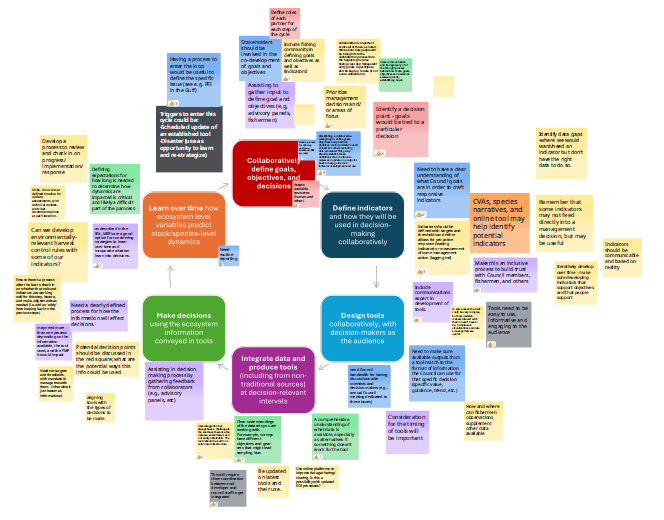
The SAFMC Ecosystem Data Workshop Series Report summarizes a five-session virtual workshop held in early 2026 to improve how ecosystem information is used in South Atlantic fisheries management. The workshop was a collaborative effort capturing input from Council, NOAA, state, academic, and regional partners and provides strategic guidance for making ecosystem tools, indicators, and data more decision-relevant, transparent, and useful to the Council, fishing public, and regional partners.
As part of the East Coast Coordination Group’s efforts to collaborate on IRA Governance projects across the region, the NEFMC, MAFMC, and SAFMC are hosting a series of governance-focused workshops. Initial concepts for potential governance adjustments were developed through the East Coast Scenario Planning process. These ideas require further development through this workshop series and via related IRA projects underway at each of the three East Coast Councils. Workshop planning will be informed by stakeholder outreach, and all workshops will generate a report summarizing outcomes.