Seminar Series: Salty Since 1972- Coastal and Offshore Fishery-independent Surveys at SCDNR
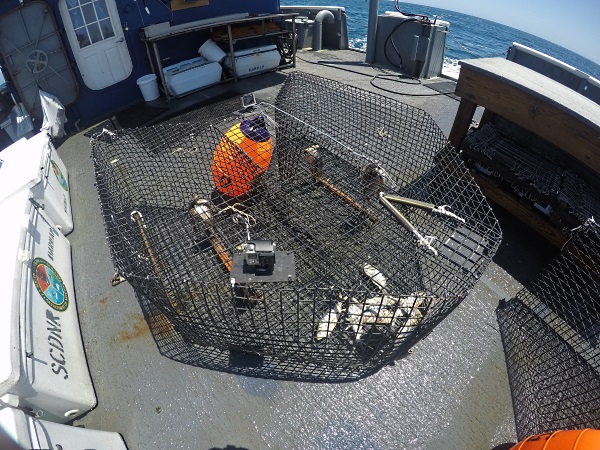
SCDNR scientists received their first MARMAP grant from the federal government in 1972 to conduct offshore research and monitoring of fish and invertebrate communities in support of management. These efforts began with sampling the youngest and smallest of these communities using plankton nets. Net-based monitoring efforts evolved into trawling, moved inshore in 1986-1990, and became the SEAMAP-SA funded Coastal Trawl Survey to monitor coastal state and federally managed species. At the same time, offshore efforts evolved into trapping and longlining for sub-adult and adult reef fish. After 40 years, MARMAP reef fish efforts joined forces with two additional funding sources and programs, SEAMAP-SA Reef Fish and SEFIS, to form the Southeast Reef Fish Survey (SERFS), focused solely on the chevron trap survey. The combined SERFS effort broadened sampling effort, spatial coverage, and added multiple new technologies (such as video survey gear) and complementary vessels. In just the past five years, we also began partnering with commercial longline captains in NOAA’s South Atlantic Deepwater Longline (SADL) survey to efficiently sample deepwater species like tilefishes. The SCDNR’s five decades of work in the South Atlantic region have taught us many lessons, grown numerous partnerships, created an historical record of at-sea fashion and facial hair, and led to better products for management and science.
Presenters: Drs. Julie Vecchio, Tracey Smart, and Walter Bubley