Council Addresses Broad Range of Federal Fishery Issues During September Meeting
Executive Orders, options for state management of red snapper, an increase in blueline tilefish catch limits, and measures for black sea bass were included in a week-long meeting
The South Atlantic Fishery Management Council met this past week in North Charleston, South Carolina, to address federal fishery management issues in the South Atlantic region. During the week-long meeting, the Council reviewed public input received relative to Executive Order 14276 Restoring American Seafood Competitiveness. The Council began discussion of the Executive Order during its June 2025 meeting and solicited online public comment from July 28 through August 15, 2025, as well as input from its advisory panels via a virtual meeting held on August 11th.
Executive Order 14276
Each of the eight regional fishery management councils must provide a letter to the Secretary of Commerce outlining actions underway or planned to address the directives of the Executive Order. Council members reviewed a summary of topics provided by the public and its advisory panels and decided to focus initially on actions already underway to help ensure their timely completion as directed in the EO. These include:
- Removing or considering ecosystem component designation for several species in the Snapper Grouper Fishery Management Plan (FMP). There are currently 55 species within the FMP.
- Addressing commercial federal permit issues and improving commercial trip efficiency through Amendment 60 to the Snapper Grouper FMP.
- Supporting the development of Exempted Fishing Permit applications from the four South Atlantic states to explore state management of the recreational Red Snapper fishery.
The response to the Executive Order will also note the Council’s work to increase stakeholder engagement, acknowledging that stakeholder input is a fundamental component of the Council process. Recommendations that NOAA Fisheries prioritize items under their purview will also be included in the response. These include continuing data collection (e.g., dockside sampling) and conducting more timely stock assessments in the South Atlantic region and eliminating the prohibition of shark fin sales due to its negative impacts on fishing businesses and potential contribution to depredation.
State Management of Recreational Red Snapper
During the meeting week, the Council held an informational session on joint state-federal management that included presentations on multiple topics. NOAA Fisheries Southeast Regional Office and the Gulf Council addressed regulatory procedures and their roles in implementing state-based management of Red Snapper in the Gulf of America. A state perspective was provided by the Florida Fish and Wildlife Conservation Commission, and a broader Atlantic perspective by the Atlantic States Marine Fisheries Commission.
The Council discussed issues to be addressed if joint state-federal management of Red Snapper is considered in the South Atlantic. A list highlighting discussion topics and questions is available from the Full Council 1 Summary Report. The Council agreed to start developing a plan amendment for state management of recreational Red Snapper. Each state will initially develop and submit Exempted Fishing Permit applications to NOAA Fisheries to begin exploring the concept. Presentations on the state’s proposals are scheduled for the December 2025 Council meeting, when discussion on next steps will continue.
Increasing Blueline Tilefish Catch Limits
Following the latest stock assessment for Atlantic Blueline Tilefish (SEDAR 92), completed in March 2025, the Council’s Scientific and Statistical Committee provided the Council with an updated Acceptable Biological Catch (ABC) level that would allow an increase in harvest. The stock assessment includes Blueline Tilefish found within both the Mid-Atlantic and South Atlantic Fishery Management Councils’ jurisdictions.
In order to implement new catch limits for Blueline Tilefish for the 2026 fishing season, the South Atlantic Council is preparing Abbreviated Framework Amendment 5 to adopt the recommended ABC and establish a total annual catch limit. Jurisdictional allocations and other management measures will be addressed in a future amendment. A public hearing will be held during the Council’s December 2025 meeting in Kitty Hawk, North Carolina.
Black Sea Bass
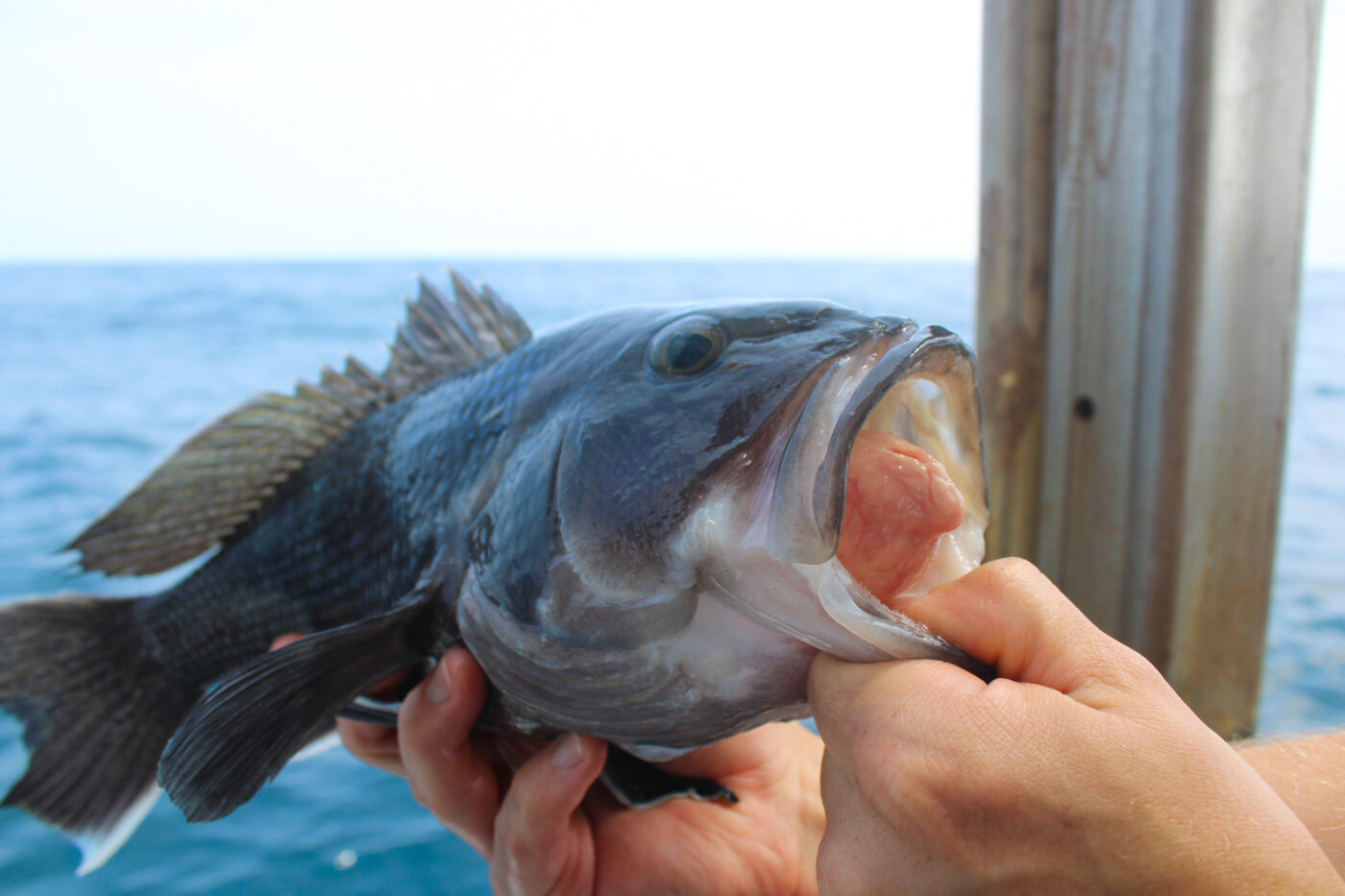
The Council continued work on Regulatory Amendment 37 to quickly implement measures to address the continuing decline in the Black Sea Bass stock in the South Atlantic. Additional actions will be considered through Amendment 56 to the Snapper Grouper FMP.
The regulatory amendment proposes changes to minimum size limits, reductions in the recreational bag limit, and a spawning season closure for both commercial and recreational sectors with a minimum closure of two months. Regulatory Amendment 37 would establish recreational and commercial annual catch targets (ACTs) equal to 50% of the average landings from 2019-2023. The Council would reconsider the ACTs and associated measures two years after implementation. Virtual public hearings for Regulatory Amendment 37 will be held prior to the Council’s December meeting. Additional details will be provided as they become available.
Additional information about the Council’s September 2025 meeting, including individual reports from committee meetings and meetings of the Full Council, are available from the Council’s website at: https://safmc.net/events/september-2025-council-meeting/. The next meeting of the South Atlantic Fishery Management Council is scheduled for December 8-12, 2025, in Kitty Hawk, North Carolina.