Council Receives Updates on Red Snapper State Management Efforts; Approves Black Sea Bass and Blueline Tilefish Measures During December Meeting

Council meeting planned in January for Oculina Shrimp Access Area
Cold winds continued to blow across the Outer Banks as members of the South Atlantic Fishery Management Council met this past week in Kitty Hawk, North Carolina. The Council addressed federal fishery management issues in the South Atlantic region, including measures to reduce the harvest of Black Sea Bass and changes to catch limits for Blueline Tilefish. Council members also received updates on Exempted Fishing Permit applications designed to test state management of Red Snapper in Federal waters.
The Council discussed options for approval of a joint amendment to establish a Shrimp Fishery Access Area in the Oculina Bank Habitat Area of Concern off the east coast of Florida, continued working on measures affecting species managed within the Snapper Grouper Fishery Management Unit, and provided guidance for its Citizen Science Program, including research priorities.
State Management of Recreational Red Snapper
Representatives from each of the South Atlantic states presented information to the Council on their Exempted Fishing Permit (EFP) applications for Red Snapper. The applications, submitted to the Secretary of Commerce on November 10, 2025, would explore state management of the recreational (private angler and for-hire) Red Snapper fishery. Copies of the individual EFPs are available in the December meeting briefing book materials.
The Council also received a presentation summarizing results of Year 1 of the Red Snapper EFP that was awarded to the Florida Fish and Wildlife Conservation Commission in 2024. Following discussion, Council members drafted comments that will be used to develop a Council letter providing recommendations in response to the Red Snapper EFPs. NOAA Fisheries and the Secretary determines the approval or disapproval of all EFPs after taking public comment. Public comment on the Red Snapper EFPs will be solicited by NOAA Fisheries in 2026,after the EFPs are determined complete, according to Andy Strelchek, NOAA Fisheries Regional Administrator.
Black Sea Bass Reductions
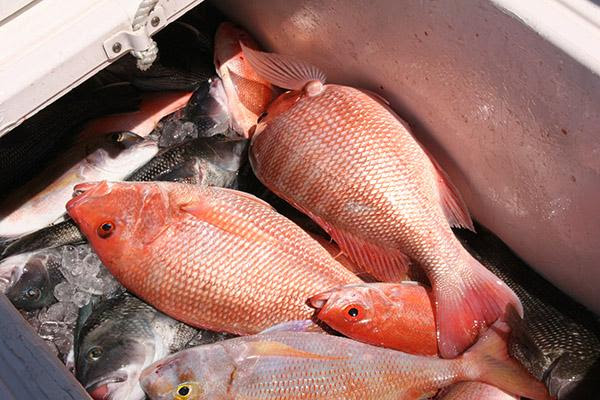
After reviewing public comment and recommendations from its Snapper Grouper Advisory Panel, the Council approved Regulatory Amendment 37 to the Snapper Grouper Fishery Management Plan. If approved by the Secretary of Commerce, the Amendment would implement measures to reduce harvest and address the continuing decline in the Black Sea Bass stock in the South Atlantic.
The regulatory amendment would reduce the recreational bag limit from 7 fish per person per day to 3 fish per person per day and establish an annual two-month spawning season closure (February 1 – March 31) for both commercial and recreational sectors. No changes to the minimum size limit are being proposed. Regulatory Amendment 37 would establish recreational and commercial annual catch targets (ACTs) equal to 50% of the average landings from 2019-2023. The Council would reconsider the ACTs and associated measures two years after implementation. Additional actions will be considered through Amendment 56 to the Snapper Grouper Fishery Management Plan.
Blueline Tilefish Catch Limits
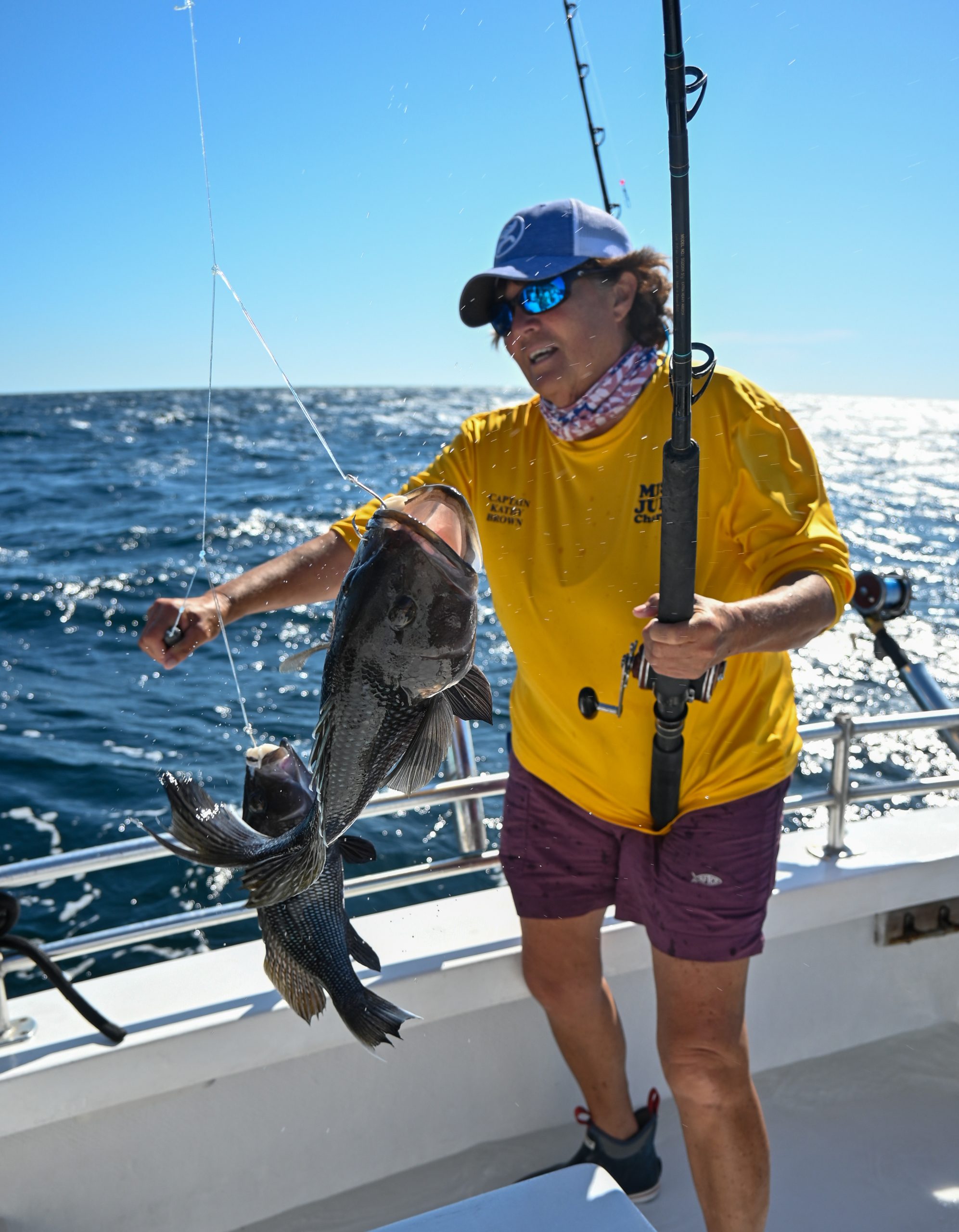
The Council approved Abbreviated Framework Amendment 5 to update the Annual Catch Limit (ACL) for Blueline Tilefish in the South Atlantic region. The amendment was developed following the latest stock assessment for Atlantic Blueline Tilefish (SEDAR 92), completed in March 2025, and recommendations from the Council’s Scientific and Statistical Committee. The stock assessment includes Blueline Tilefish found within both the Mid-Atlantic and South Atlantic Fishery Management Councils’ jurisdictions.

The Council’s intent is to implement the new catch limits for Blueline Tilefish for the 2026 fishing season. The total ACL will be equal to 314,058 pounds whole weight upon approval of the Framework Amendment by the Secretary of Commerce. In the South Atlantic region, the fishery is divided between sectors with the commercial fishery allocated 50.07% and the recreational sector 49.93% of the catch limit. The recreational fishery opens annually May 1st, with NOAA Fisheries determining the length of the season based on the recreational ACL. The commercial fishing year begins January 1st, with a trip limit of 100 pounds, and closes once the commercial ALC is projected to be met.
Jurisdictional apportionment between the Mid-Atlantic and South Atlantic regions and other management measures will be addressed in a future amendment.
Shrimp Fishery Access Area – Oculina Bank HAPC
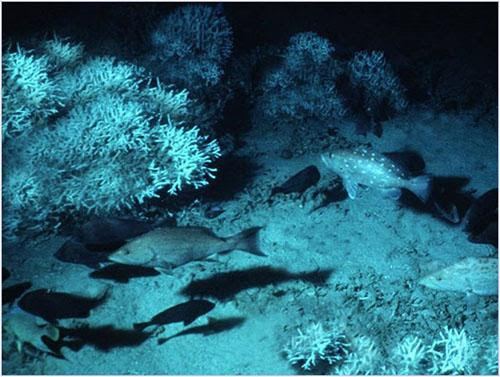
The Council reviewed the final draft amendment (Coral Amendment 11 and Shrimp Amendment 12) that would create a Shrimp Fishery Access Area along the eastern boundary of the northern extension of the Oculina Habitat Area of Particular Concern. The area is where the rock shrimp fishery historically operated. The Council was not able to approve the amendment at this meeting because several sections were not updated as planned due to the government shutdown earlier this fall.
The Council will hold a meeting via webinar on Friday, January 23, 2026 from 10 a.m. until 12 p.m. to address the necessary updates to the amendment before approving it for consideration by the Secretary of Commerce. Public comment will be accepted. Meeting materials, including an online public comment form, will be available one week prior to the January meeting.
Additional Information
Additional information about the Council’s December 2025 meeting, including individual reports from committee meetings and meetings of the Full Council, are available from the Council’s website at: https://safmc.net/events/december-2025-council-meeting/. The next meeting of the South Atlantic Fishery Management Council is scheduled for March 2-6, 2026, in Jekyll Island, GA.