Efforts to Reduce Release Mortality
SAFMC Feature Article | 9-24-2026
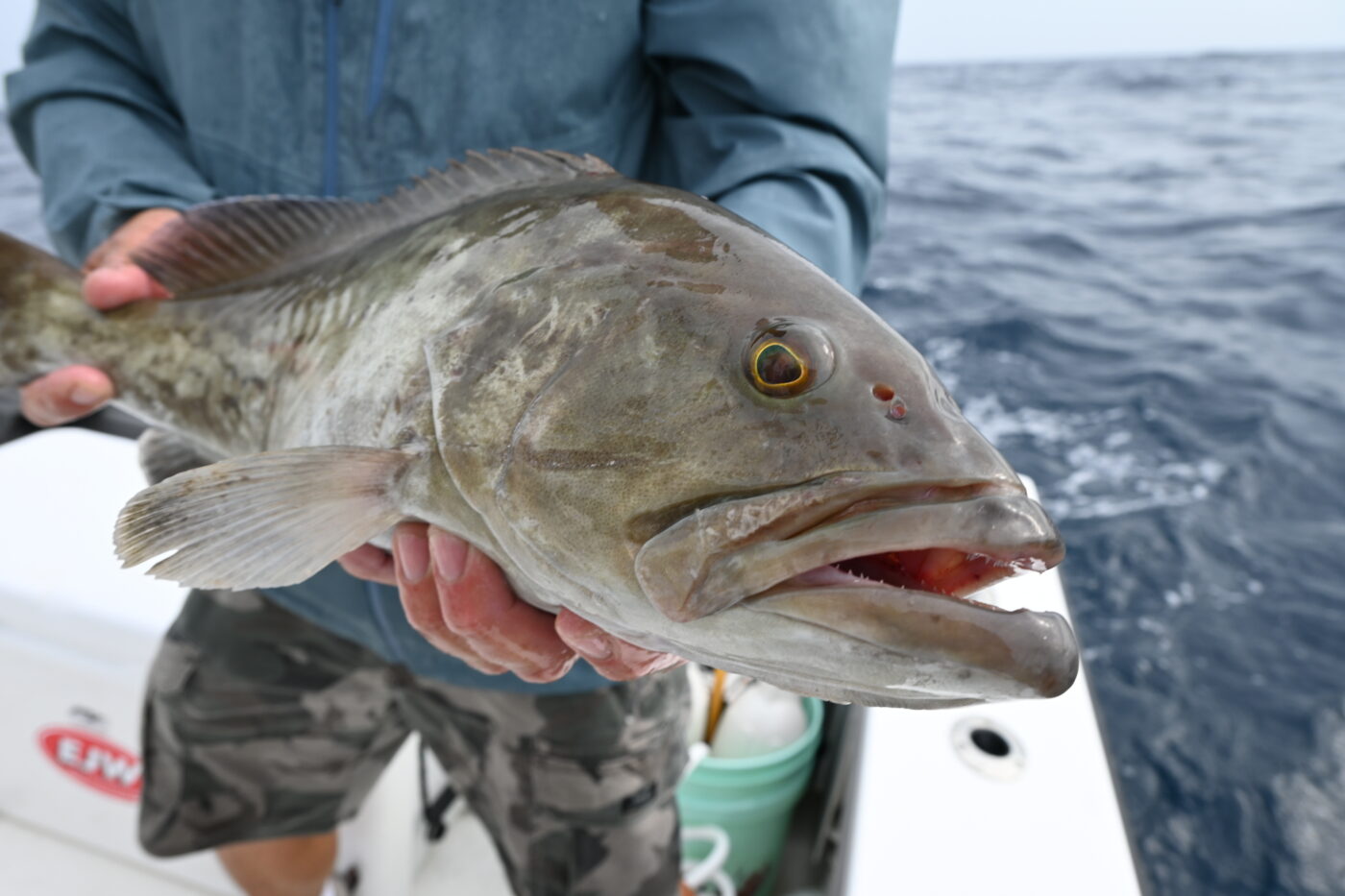
For fishermen, bycatch is often part of a day out on the water. The fish captured may be caught unintentionally, undersized, out of season, over the regulatory limit, or in an area where harvest of that species is not allowed. For any of these reasons, the fish must be released, but a fish put back in the water is not necessarily a fish that survives.
Understanding and reducing the impacts of released fish, also known as discards, has been an ongoing challenge for the South Atlantic Fishery Management Council (SAFMC, Council). Over the years, the Council has brought together fishermen, scientists, managers, and outreach specialists to better understand what happens to released fish, how to manage a fishery with discards and, most importantly, how to identify practical ways fishermen can improve a fish’s chances of survival.
Understanding the Problem
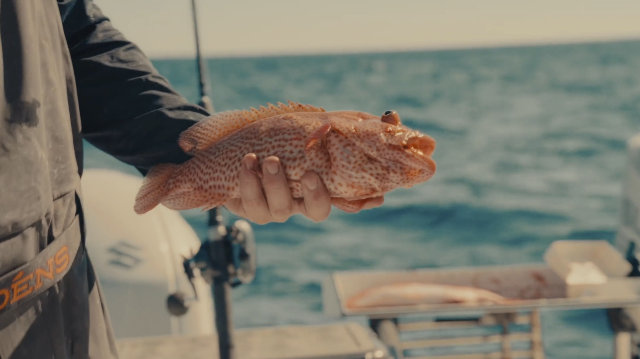
The terms bycatch, discards, and release mortality are often used interchangeably, but they describe different parts of a common problem. Bycatch generally refers to a species caught in fishing gear that are not the intended target. Release mortality rate is the percent chance that the fish will not survive because of the capture event. Why might a fish not survive after being released? The answer depends on the biology of the species, the environmental conditions, the depth of capture, and how the fish was caught and handled.
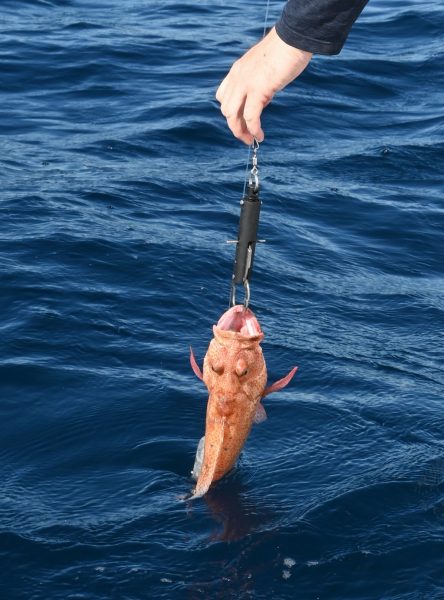
For many South Atlantic reef fish, one of the biggest challenges is barotrauma. When a fish is caught from deep water and brought rapidly to the surface, the pressure changes between the seafloor and the surface causes gases in its body to expand. Fish experiencing barotrauma may have difficulty swimming back down, exhibiting symptoms such as bulging eyes, a distended stomach, and inflated swim bladder. These fish may require help returning to depth. A descending device, for example, can quickly return a fish to depth where the pressure is restored and give it a better chance of survival.
Scientists use a combination of research tools including tagging studies, field observations, and statistical models to estimate release mortality, or what percentage of released fish do not survive. These estimates are important because they help fisheries scientists account for release mortality in addition to total fish harvested, ultimately leading to better estimates of overall fish populations. For fishermen, however, the science also points toward something practical: how a fish is handled and released can make a difference.
The Challenges of Managing Discards
The Council has addressed release mortality through a combination of management measures, research, and conversations with the fishermen who are on the water.
If high numbers of fish are estimated to not survive being caught and released, this must be included in estimates of the number of fish that can be sustainably removed from the population by fishing, which can lead to fewer fish available for harvest. This means that improving survival of released fish is not only a conservation goal, but also a key factor in maintaining sustainable harvest opportunities and avoiding unnecessary restrictions in the future.
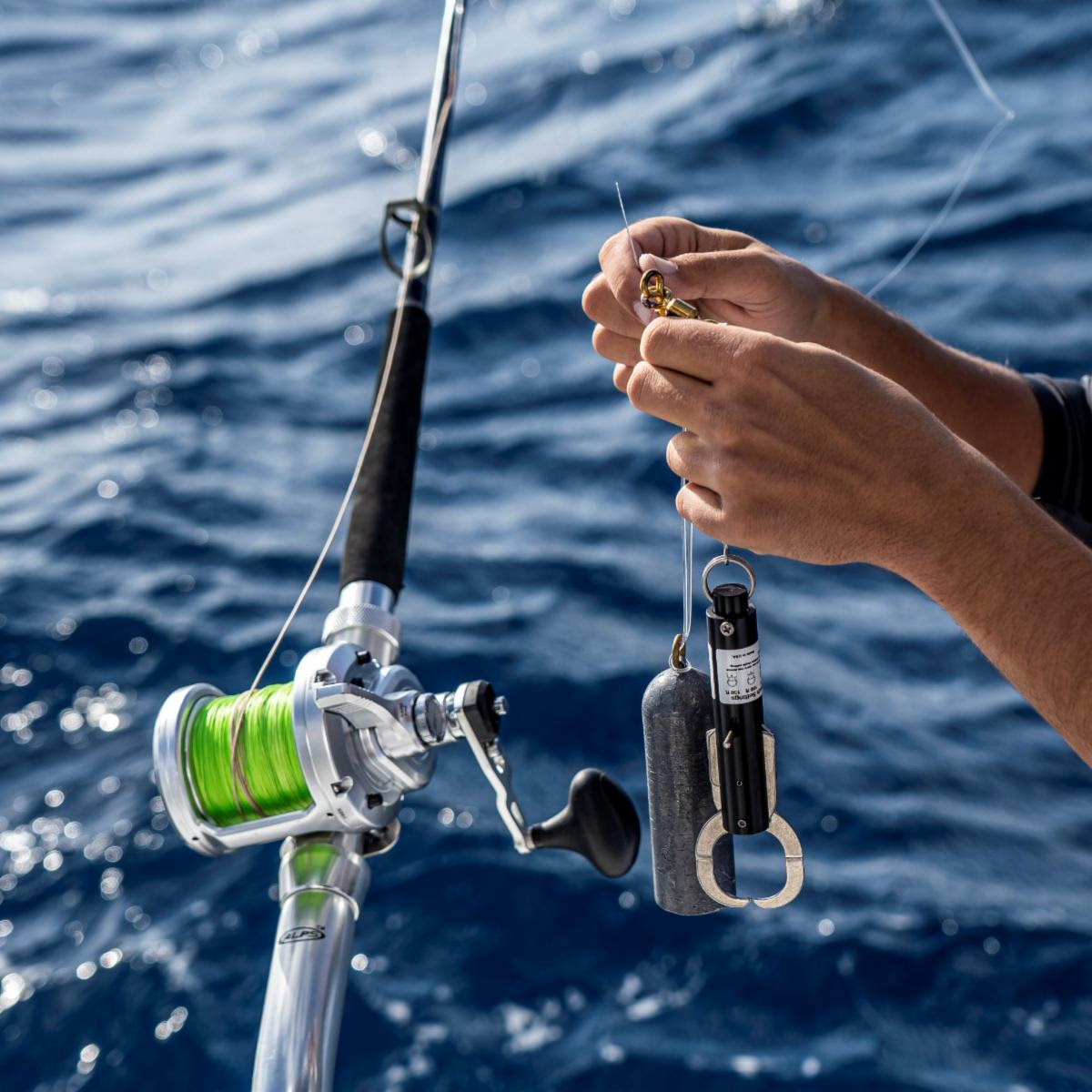
Management actions have evolved as new information, technology, and gear have become available. One important milestone came with Snapper Grouper Regulatory Amendment 29, which established requirements for descending devices in 2020. The amendment requires a descending device to be rigged and ready for use aboard vessels fishing for snapper grouper species. Widespread use of these required devices is expected to increase survival for released fish, improving the overall health of the population and potentially increasing the number of fish that can be harvested in the future.
These measures represent one part of the Council’s approach: establishing requirements when needed to address conservation concerns, while continuing to learn about what works in real-world fishing situations. But regulations alone cannot solve the problem. A major part of the Council’s work has been helping fishermen understand why best fishing practices matter and how they can be incorporated into everyday fishing.
Spreading the Word on Best Fishing Practices
Through a grassroots approach, the Council established the Best Fishing Practices (BFP) campaign, focused on addressing the issue of release mortality. Rather than simply displaying regulations, Council staff meet people where they fish, work, and gather- building relationships and having conversations about practical ways to improve the survival of released fish.
The BFP campaign gained significant momentum when the Council partnered with Sea Grant on a Reef Fish Extension/Communication Fellowship. From 2022 through 2026, the fellowship helped expand tackle shop outreach, connect with fishing media, and bring best fishing practices to a wider audience through videos, articles, and other communication products. The Council also created a dedicated Best Fishing Practices Outreach Specialist position from 2023 to 2025. Having staff specifically focused on BFP outreach, alongside the Sea Grant fellow, allowed the Council to substantially expand its message throughout the region.
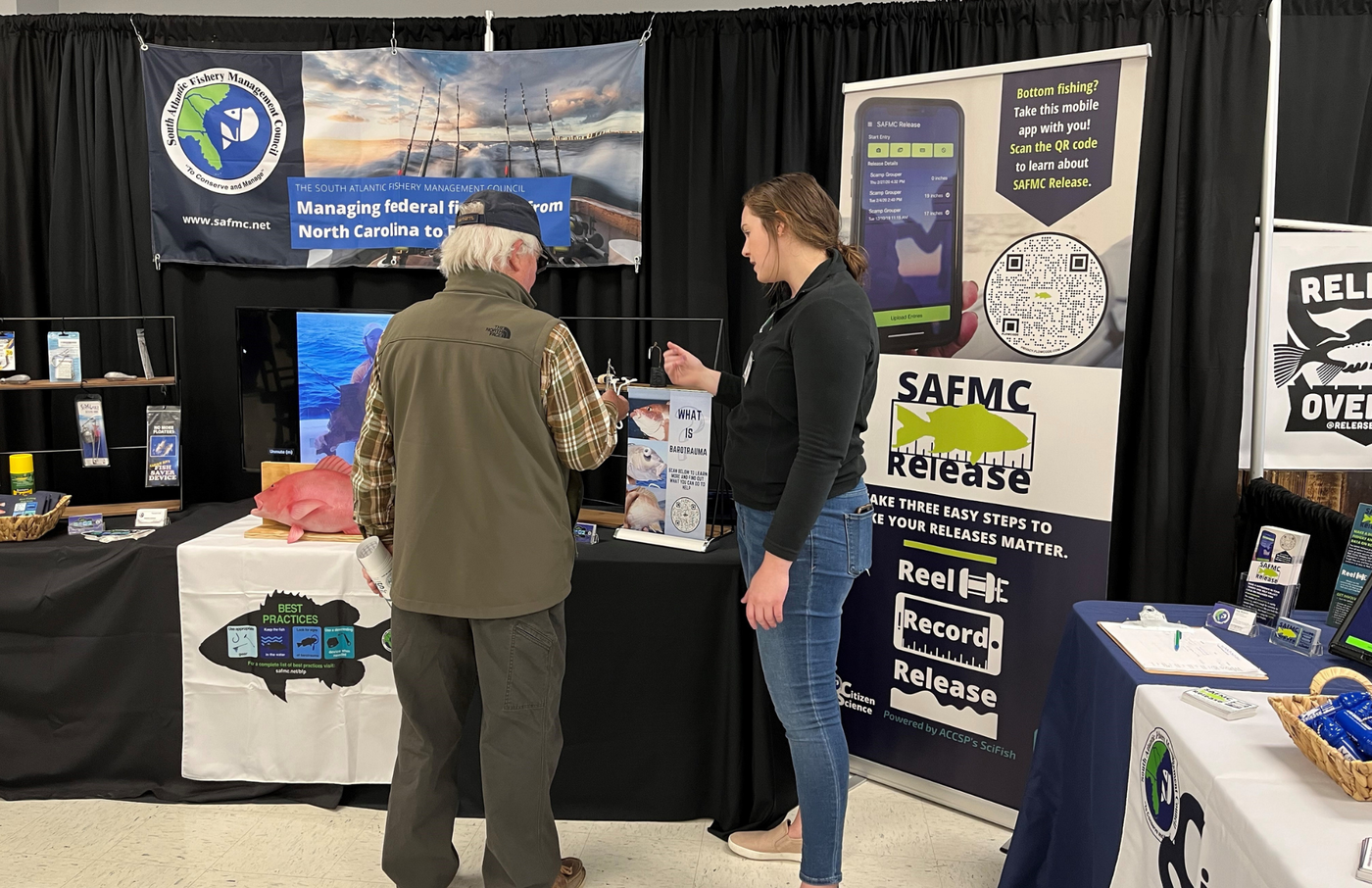
From 2020 through 2026, Council staff visited 131 tackle shops, with 74 shops receiving multiple visits. Staff also participated in 95 outreach events and hosted 30 seminars attended by more than 1,600 people between 2021 and 2026.

With limited staff resources and a region stretching from North Carolina to Florida, the Council cannot reach every fisherman directly. Trusted ambassadors in fishing communities have become an important way to extend that reach. That idea led to another important piece of the program: the Best Fishing Practices Master Volunteer Program (BFP MVP). Through 12 workshops across the South Atlantic, approximately 200 volunteers learned about federal fisheries management, best fishing practices, SAFMC Citizen Science opportunities, and ways to become involved in the management process.
Where Do We Go from Here?
Reducing discards and release mortality is not a problem with a single solution. It is an ongoing process of learning, adapting, and working together.
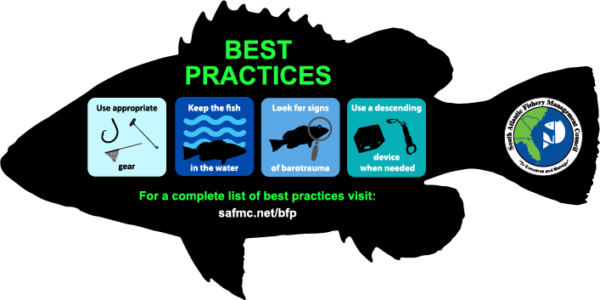
Fishermen are an essential part of that equation. Handling fish carefully, minimizing air exposure, using descending devices when appropriate, and learning how to recognize and respond to barotrauma are all ways fishermen can help improve fish survival.
Every fish that is released represents an opportunity. With the right tools, knowledge, and practices, more of those fish can survive to help sustain the health and longevity of the South Atlantic’s fisheries for years to come.