Bringing Ecosystem Information Into the Decision-Making Process
SAFMC Feature Article | 8-13-2026
Fish live in a complex world of diverse habitats, tidal and seasonal cycles, predators and prey, and changing ocean conditions. Fishermen and managers know that information about the ecosystem matters to fish, but it has been challenging to figure out how to use it when making decisions. A new two-part Resilient Fisheries project funded by the South Atlantic Council looked across all U.S. Fishery Management Councils to see how ecosystem information is used in fishery decisions, and suggests practical ways for the South Atlantic Council to bring more ecosystem information into its processes.
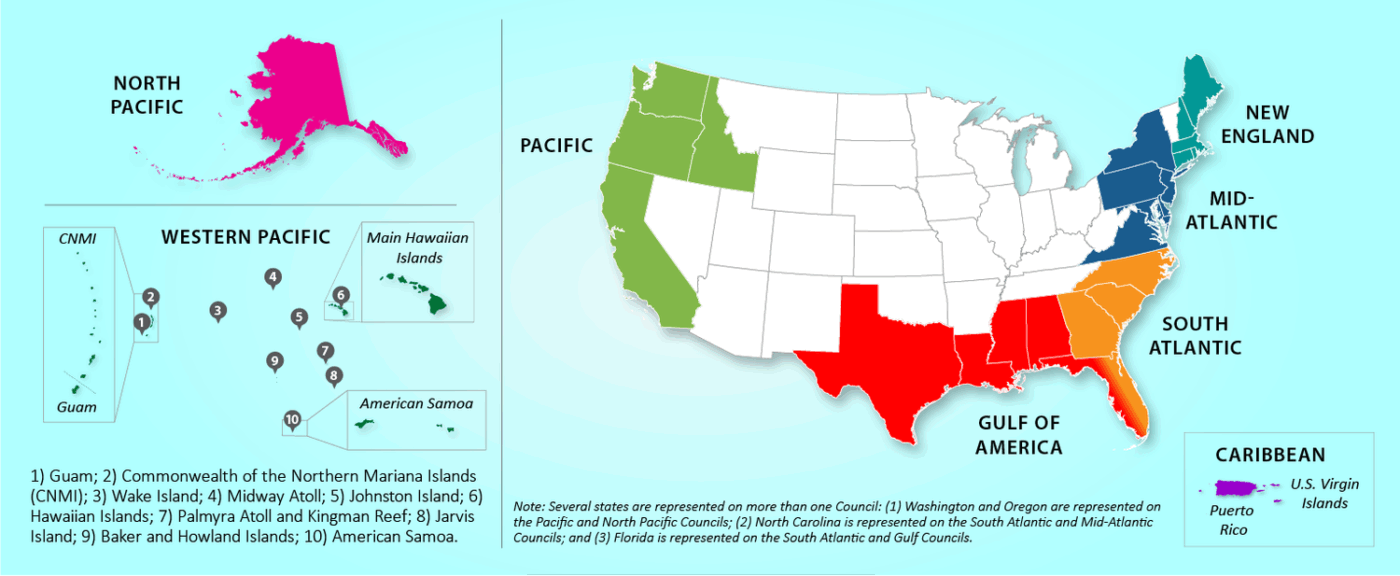
The first report surveyed all eight U.S. Councils, from the North Pacific to the Caribbean, comparing available ecosystem data and uses. U.S. Councils have different resources and levels of information as well as diverse geography and fishery issues that lead to different approaches. The North Pacific, Pacific, New England, and Mid-Atlantic Councils receive annual “ecosystem status reports” with many indicators and have various risk-based frameworks to inform decisions based on ecosystem conditions. In the Western Pacific and Caribbean, island-based information and ecosystem approaches tailor management to local socioeconomic needs. The South Atlantic and Gulf Councils are developing ecosystem approaches and risk-based frameworks around less frequent assessment and ecosystem reporting than in Alaska, the Pacific and the Northeast. Yet a common thread emerged: managers want to use ecosystem information, but often feel overwhelmed by its complexity. Council staff in the South Atlantic and across the country emphasized that ecosystem information needs to be delivered in “digestible packets” tied directly to real decisions. And some stakeholders are concerned that ecosystem information may only lead to more restrictions.

Importantly, the review found the South Atlantic isn’t starting from scratch. The Council can build on its strengths: a history of linking habitat protection with ecosystem thinking, an active citizen science program, existing climate vulnerability assessments for fish and fishing communities, a recent ecosystem status report, and long-term investment in a regional food web model.
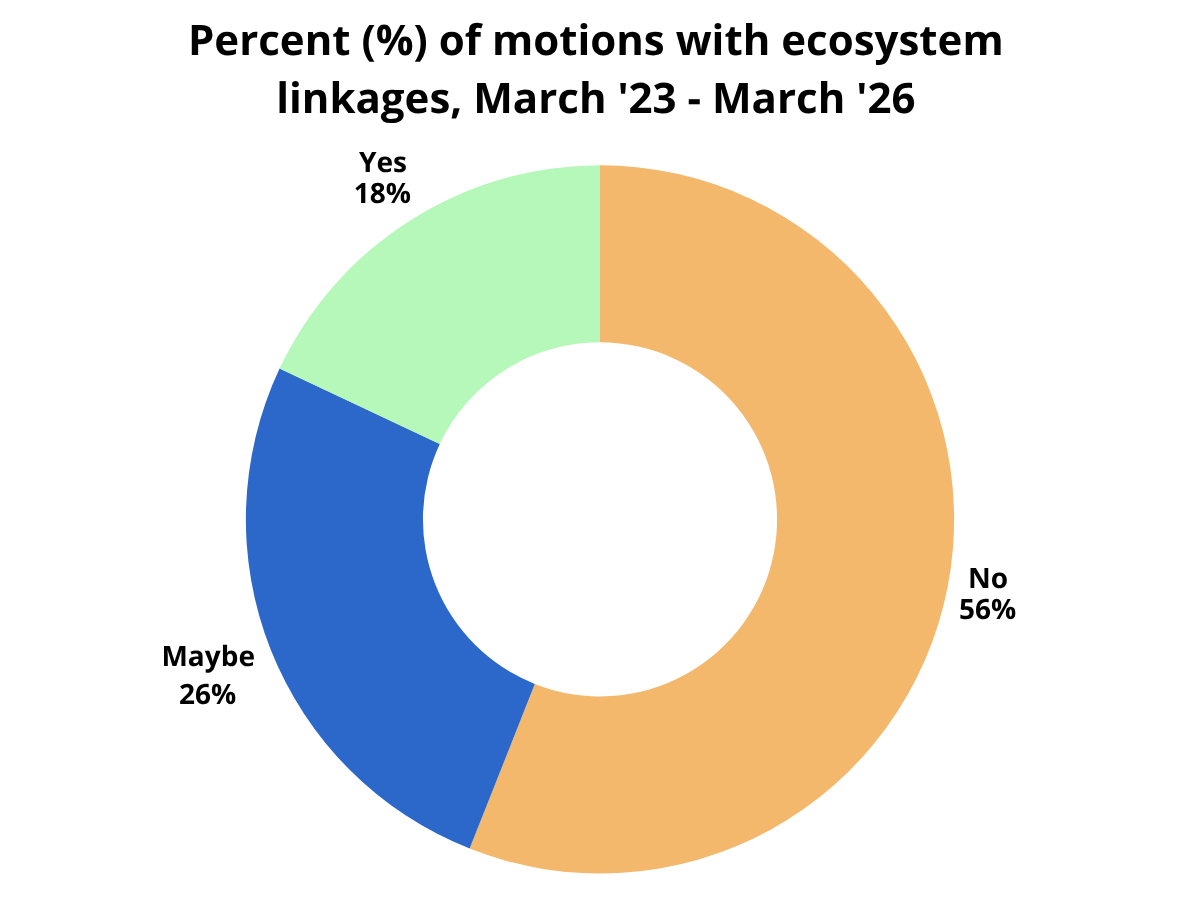
The second report digs into South Atlantic Council’s recent history to find specific decisions where ecosystem information might help. A review of three years of Council motions found that 18% already involved ecosystem considerations directly, with another 26% having potential to include them. Potential Council actions ranged from simple (like requesting that available ecosystem information be highlighted in stock assessments, or asking stakeholders for ecosystem observations at port meetings) to more complex evaluations of potential climate impacts on current or planned seasonal or spatial management. The project also matched the Council’s existing habitat policies against available ecosystem data, finding that in many cases, useful indicators already exist for the stated policies–they just need to be connected to the right decisions. Similarly, the project suggests how the food web model and existing indicators may help the Council rank the risks for determining annual catch limits.
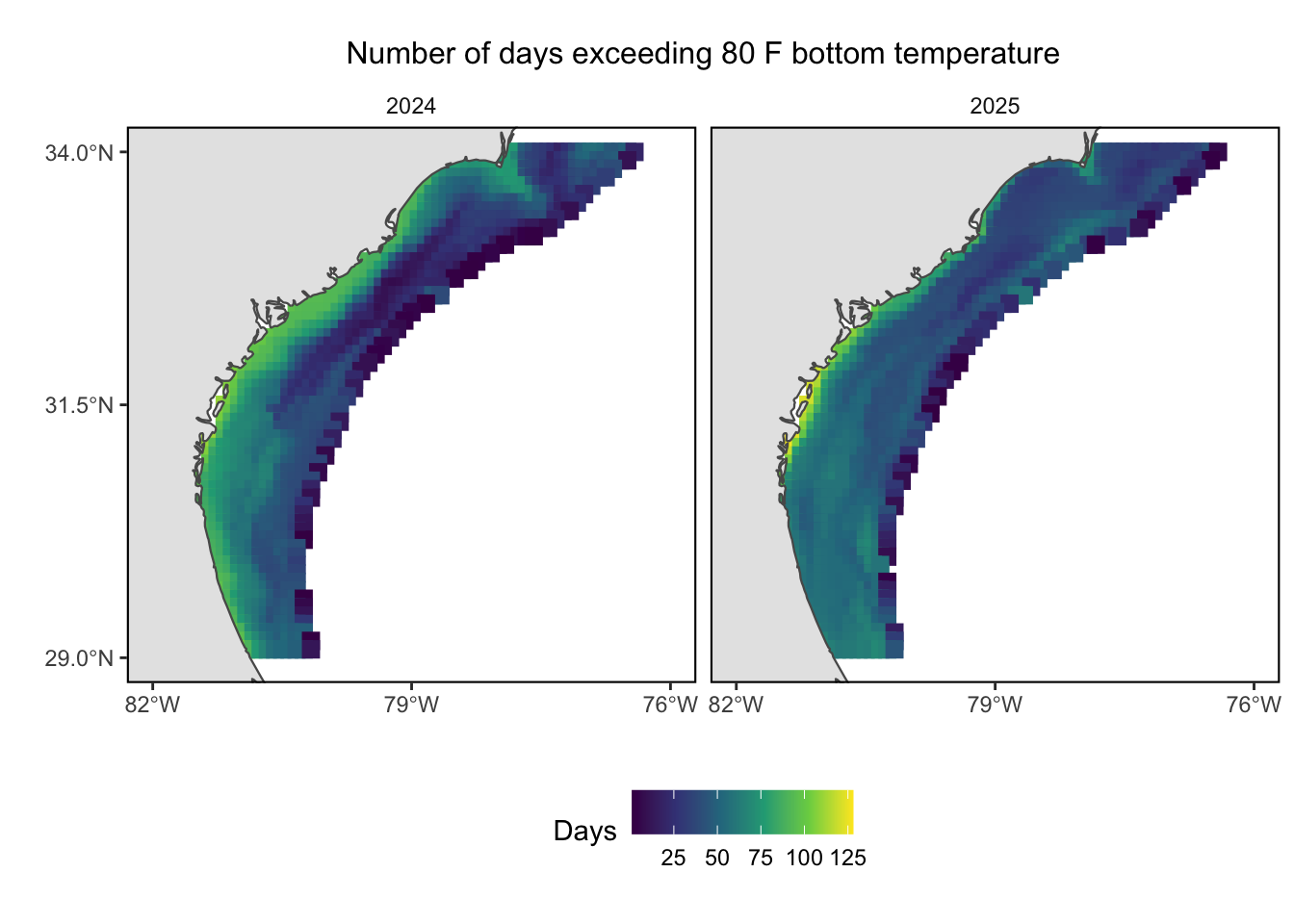
The report also tested something new: pulling global ocean temperature data to build a prototype bottom temperature map showing where and when South Atlantic waters may be too warm for certain species, adapting methods already used in the Northeast. The report also outlines how the Council’s food web model could eventually help evaluate management strategies for entire groups of fish species at once, rather than one species at a time. New multispecies approaches may be useful given that some of the Council’s fisheries include dozens of species with management based on individual stock assessments for fewer species.
The project’s takeaway isn’t a call for more data collection; it’s a call for better connections. Connections range from linking existing information about ocean conditions, food webs, and climate risk directly to specific management decisions, to building a structured process for turning ecosystem insight into action. Overall, the South Atlantic Council has a genuine opportunity to make fisheries management more resilient to a changing ocean, using tools already close at hand.