SEDAR: Strengthening the Science That Informs Fisheries Management
SAFMC Feature Article | 11-5-2026
Since 2002, SEDAR has pioneered a cooperative approach to stock assessments, bringing scientists, managers, and stakeholders together to strengthen the science that supports sustainable fisheries.
Effective fisheries management begins with understanding the status of fish populations. Answering questions about population size, fishing impacts, and sustainability of the fishery relies on a foundation of accurate scientific information and collaboration among the people who study, manage, and depend on our fisheries.
For the South Atlantic Fishery Management Council (SAFMC), this work is supported by a program that helped establish a novel approach to fisheries science. Established in 2002, the Southeast Data, Assessment, and Review (SEDAR) program was created to foster a transparent, rigorous, and collaborative approach to stock assessments. The program’s goal is to increase the quality and reliability of stock assessments to better inform fisheries management. What began as a partnership between the SAFMC and NOAA Fisheries’ Southeast Fisheries Science Center and Southeast Regional Office has grown into a regional process combining multiple management organizations and scientific agencies.
SEDAR’s success depends on cooperation among organizations with different responsibilities and expertise. Its Cooperators include the SAFMC, Gulf and Caribbean Fishery Management Councils, NOAA Fisheries, Atlantic States Marine Fisheries Commission, Gulf States Marine Fisheries Commission, and Florida Fish and Wildlife Conservation Commission.
More than two decades after its inception, SEDAR demonstrates how a focus on collaboration, transparency, and scientific rigor can strengthen the foundation of fisheries management.


The Approach
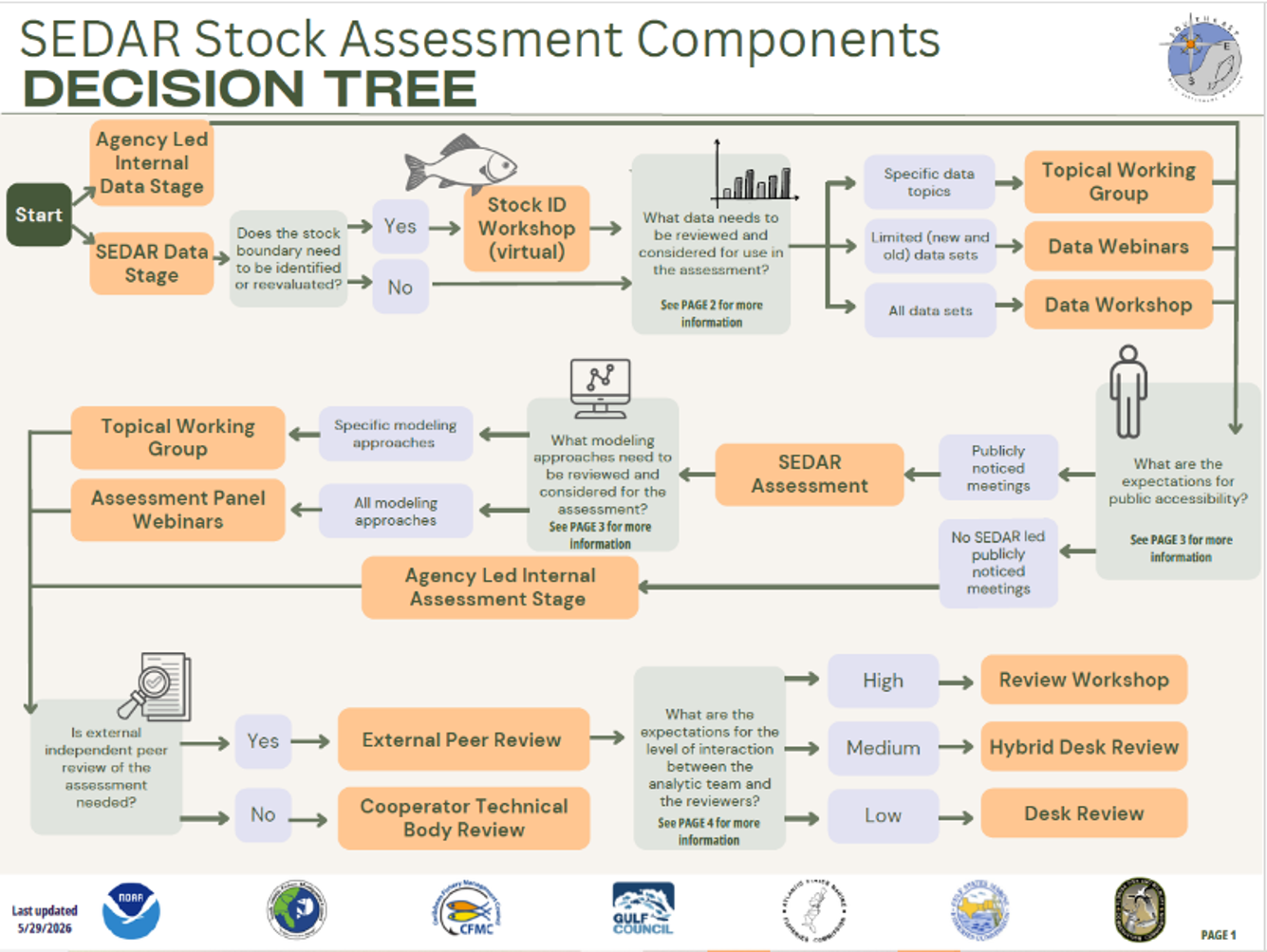
The SEDAR process is organized into three primary stages: data, assessment, and review. It provides a structured approach to examine the available data, develop the assessment model, and review the product for scientific soundness.

The foundation of a stock assessment is the data. During the data stage, available data for the stock being assessed are identified and evaluated for their suitability in the stock assessment. The core types of data for a stock assessment are defined as “the ABCs”: Abundance, Biology, and Catch. Abundance data identifies population trends through standardized scientific surveys. Biological data describes the reproduction, age, and size structure of the stock. Lastly, catch data represents the landings from the multiple fishery sectors.
The assessment stage focuses on developing and refining the stock assessment model used to estimate stock status. Scientists use quantitative analyses to integrate the available data and generate population estimates. Diagnostics and sensitivity tests are conducted to evaluate model performance and ensure the results are scientifically sound.
The review stage helps ensure the stock assessment is thorough and reliable. An independent peer review is conducted to evaluate the assessment methods, results, and conclusions. Technical and regional experts work together to assess the technical merits of the assessment and ensure uncertainty is accounted for. This final stage ensures that fisheries managers are provided adequate information to make informed fishery management decisions.
Together, these efforts connect scientific analysis with real-world experience, making the assessment process more transparent and incorporating a broader range of information into fisheries science.
Transparency and Stakeholder Engagement
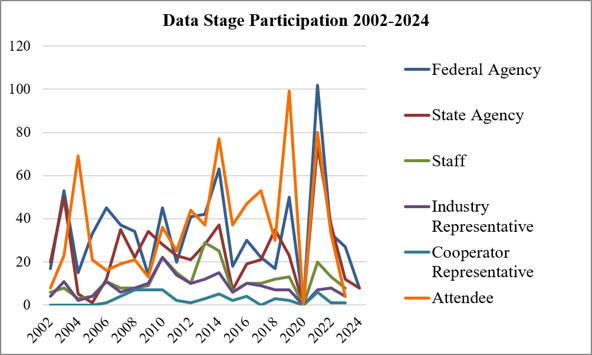
SEDAR places special emphasis on constituent and stakeholder participation in assessment development. Each stage of the process includes a panel, comprised of technical experts and stakeholder representatives. Panels bring together federal and state scientists, commercial and recreational fishermen, managers, advisory panel members, academic researchers, and nongovernmental organizations to help guide the development of the assessment. Public comment opportunities allow additional perspectives to be considered. The wide range of expertise can provide valuable observations about species distribution, changing fishing conditions, and potential data gaps.
SEDAR promotes a transparent process by having all in-person workshops and webinars open to the public and broadcast online. The SEDAR website serves as a repository by hosting assessment materials, including assessment reports, meeting materials, and supporting documentation. This allows anyone to examine the scientific information behind management decisions and understand how conclusions were reached.

Strengthening Scientific Rigor Through Independent Review
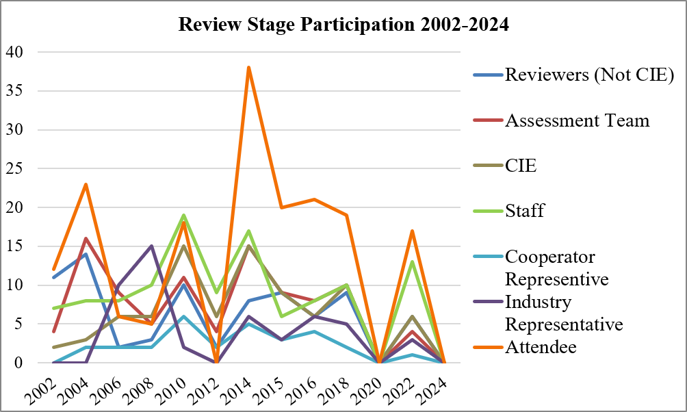
Transparency and participation are essential, but assessments must also withstand rigorous scientific scrutiny. SEDAR incorporates independent peer review to evaluate assessment methods, assumptions, and conclusions.
Review panels bring together technical expertise to examine the scientific soundness of assessment products. Reviewers are representatives from NOAA Fisheries’ Center for Independent Experts and from technical bodies such as the Council Scientific and Statistical Committees. The review process helps identify uncertainties, evaluate the strengths and limitations of assessments, and recommends improvements. In addition to reviewing the assessment, the review panel documents research recommendations that may identify missing data, needed surveys, model improvements, or other opportunities to strengthen future analyses. These recommendations help reveal recurring research needs and inform future scientific priorities, funding opportunities, and assessment planning.
Looking Ahead
SEDAR faces an ongoing challenge: producing timely stock assessments while maintaining the thoroughness, transparency, and scientific rigor on which the program was built. Addressing this challenge will require continued coordination, improved efficiencies, and investment in the data and research needed to answer increasingly complex questions about fish populations.
More than two decades after its establishment, SEDAR remains an example of what regional cooperation can accomplish. It represents more than completed assessments; it provides a collaborative framework for developing, evaluating, and sharing scientific information.
For the Council and its partners, SEDAR demonstrates how bringing people and expertise together can strengthen the science behind fisheries management and help guide decisions for the future of South Atlantic fisheries.