Regulations Frequently Asked Questions
Fisheries regulations can be complex and sometimes difficult to keep track of, especially when requirements vary across species, permits, and regions. This page provides answers to some of the most common questions about federal regulations in the South Atlantic. Each section is organized by Fishery Management Plan (FMP), with a designated staff contact listed at the top of the section. If you have questions that are not addressed here, please reach out to the appropriate staff contact. For details on specific management zones and where regulations apply please, please visit the Managed Areas page.
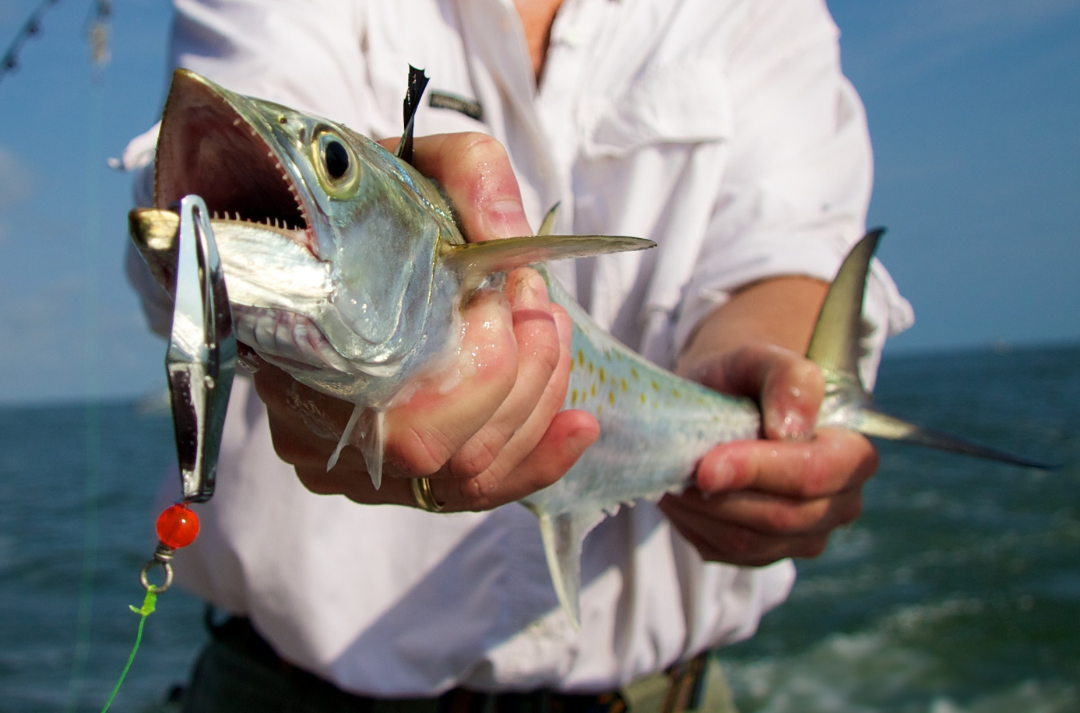
Coastal Migratory Pelagics
Species
Staff Contact
Management zones
The Council manages the commercial king and Spanish mackerel fisheries in two different zones because of the migratory nature of the fisheries to ensure all states have access at times of the year when fish are available. To date, the recreational sector has not had issues with access (closures) (this may change with conversion to FES and the new stock assessment).
Joint management between the Gulf and South Atlantic Councils
CMP FMP is a joint management plan between the Gulf Council and South Atlantic Council. The Mid-Atlantic Council ceded management of CMP species in their jurisdiction to the South Atlantic Council. Mid-Atlantic Council liaisons sit on the South Atlantic Council’s Mackerel Cobia Committee.
Permits
If you’re fishing in the Gulf, South Atlantic, AND Mid-Atlantic for king mackerel or Spanish mackerel, you need the appropriate for-hire or commercial permits. A lot of Mid-Atlantic participants have expressed that permit requirements are not well known.
Cobia management
The South Atlantic Council is still involved in managing Gulf cobia (which occurs off the east coast of Florida) through the CMP FMP, but Atlantic cobia is managed by ASMFC.
Spanish mackerel bycatch limit
Some states allow commercial harvest of Spanish mackerel to continue when federal waters are closed to commercial harvest. See your state management agencies for details on trip limits and seasons. Fish harvested in state waters count against the federal ACL for Spanish mackerel.
Sea turtle release gear
The commercial and for-hire snapper grouper fishery in the South Atlantic Region as well as the pelagic longline dolphin wahoo and highly migratory species fisheries are known to interact with endangered and threatened sea turtles. In order for these fisheries to be exempt from the take prohibitions established in the Endangered Species Act (ESA), the National Marine Fisheries Service has to comply with a series of terms and conditions, which include sea turtle handling protocols and/or guidelines.
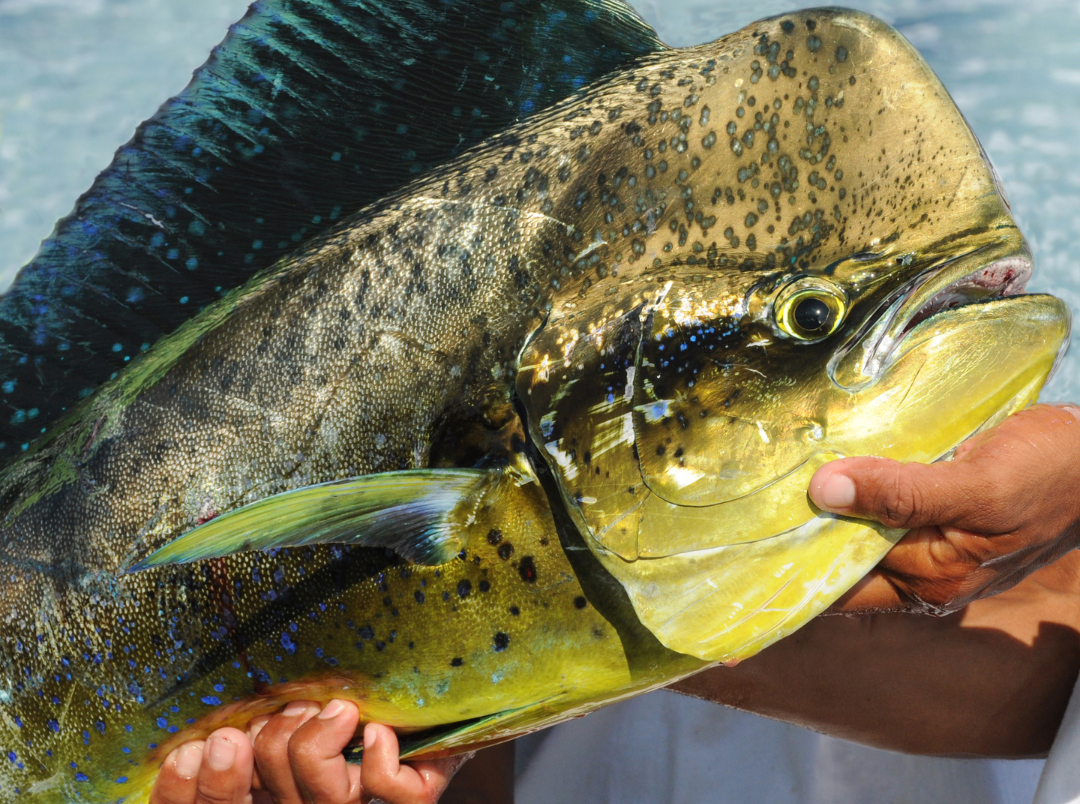
Dolphin Wahoo
Staff Contact
Operator card requirement
You may still hear about this requirement even though it was removed in Dolphin Wahoo 10. You don’t need it anymore for the Dolphin Wahoo fishery. However, for-hire and commercial captains/crew may still need it for other federally permitted fisheries (GARFO-permitted for-hire and commercial participants need an OC from GARFO, and captain and crew participating in the South Atlantic rock shrimp fishery need an OC from SERO).
Permits
- Atlantic: You must have the appropriate for-hire or commercial DW permit issued by NOAA’s Southeast Regional Office (SERO).
- Gulf: No federal DW permit is required, but be sure to follow your state’s license and permit regulations.
Always check both federal and state requirements before heading out.
Ecosystem Component (EC) Species
There are EC species in the Dolphin Wahoo FMP (bullet mackerel and frigate mackerel). An EC species is a species that is included in a fishery management plan to address ecosystem management objectives but does not require management measures such as annual catch limits, restrictive retention limits, or size limits.
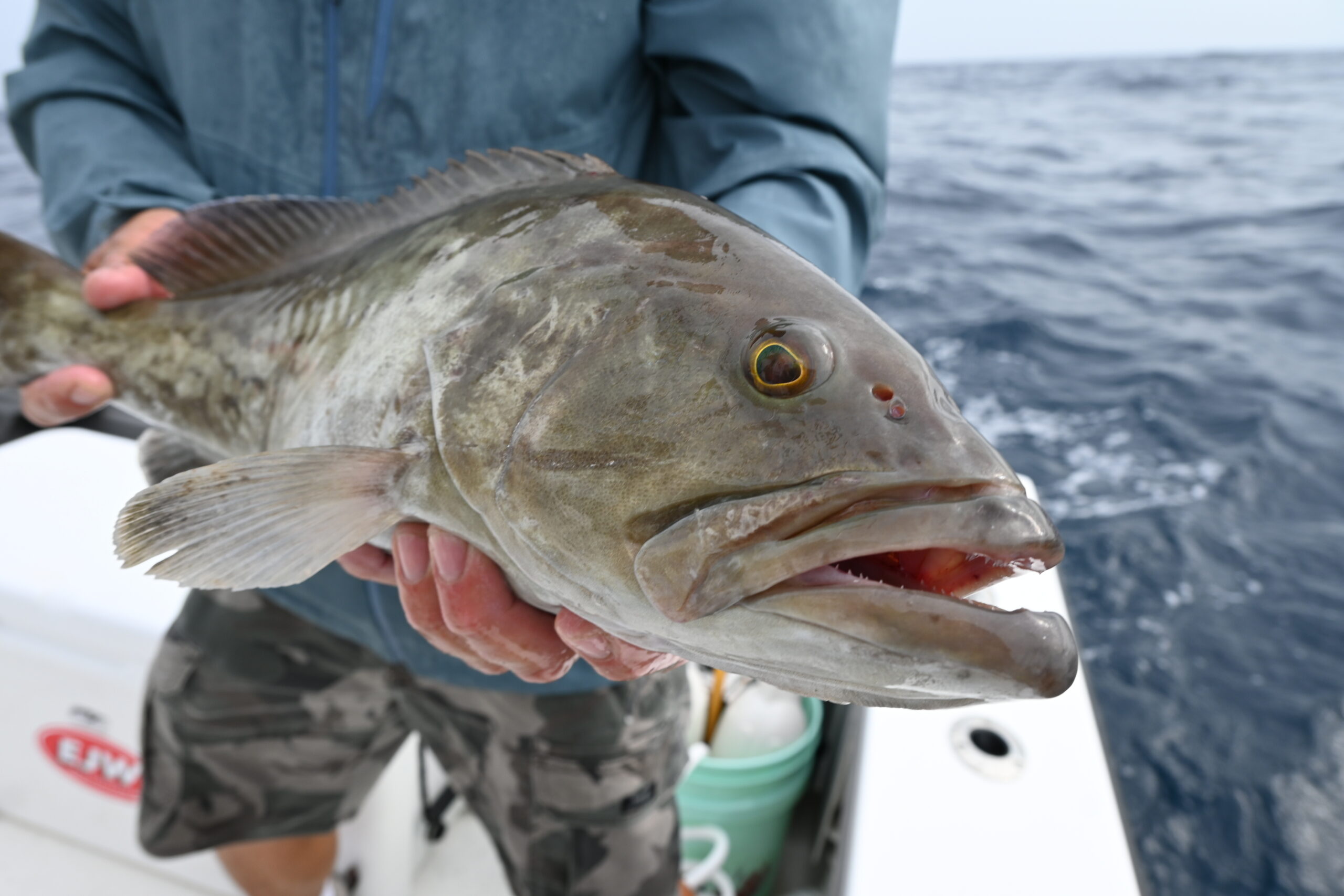
Snapper Grouper
Species
- Amberjack, Greater
- Amberjack, Lesser
- Atlantic Spadefish
- Grouper, Black
- Grouper, Coney
- Grouper, Gag
- Grouper, Goliath
- Grouper, Graysby
- Grouper, Misty
- Grouper, Nassau
- Grouper, Red
- Grouper, Red Hind
- Grouper, Rock Hind
- Grouper, Scamp
- Grouper, Snowy
- Grouper, Speckled Hind
- Grouper, Warsaw
- Grouper, Wreckfish
- Grouper, Yellowedge
- Grouper, Yellowfin
- Grouper, Yellowmouth
- Grunt, Cottonwick
- Grunt, Margate
- Grunt, Sailors Choice
- Grunt, Tomtate
- Grunt, White
- Hogfish
- Jack, Almaco
- Jack, Bar
- Porgy, Jolthead
- Porgy, Knobbed
- Porgy, Longspine
- Porgy, Red
- Porgy, Saucereye
- Porgy, Scup
- Porgy, Whitebone
- Rudderfish, Banded
- Sea Bass, Bank
- Sea Bass, Black
- Sea Bass, Rock
- Snapper, Blackfin
- Snapper, Cubera
- Snapper, Gray
- Snapper, Lane
- Snapper, Mutton
- Snapper, Queen
- Snapper, Red
- Snapper, Silk
- Snapper, Vermilion
- Snapper, Yellowtail
- Tilefish, Blueline
- Tilefish, Golden
- Tilefish, Sand
- Triggerfish, Gray
- Triggerfish, Ocean
Staff Contact
South Atlantic Snapper-Grouper 225-lbs vs. South Atlantic Unlimited Snapper Grouper Permits
The commercial snapper grouper fishery is limited access (meaning there is a limited number of permits allowed in the fishery; when all permits are held, new entrants need to acquire a permit from a current permit holder(s) to gain access). You are required to have a commercial Snapper Grouper permit. There are 2 different permit types:
- South Atlantic Snapper-Grouper 225-lbs (excluding Wreckfish permits*) also called the SG2 permit.
- This permit has a 225 lbs trip limit tied to the permit. Permit holders must still abide by species specific trip limits, not to exceed 225 lbs of any combination of snapper grouper species on a single trip. This permit can only be transferred to a vessel owned or leased by the current permit holder.
- South Atlantic Unlimited Snapper Grouper (excluding Wreckfish permits*) also called the SG1 permit.
- This permit does not have a trip limit tied to the permit, however permit holder must still abide by species-specific trip limits. An SG1 permit can be transferred to the current permit holder’s immediate family (e.g. mother, father, brother, sister, son, daughter, or spouse). A vessel owner who is not in the permit holder’s immediate family must purchase and transfer 2 valid SG1 permits to obtain a single SG1 (2 for 1). A single SG1 permit that is in a company’s name can be transferred without having to transfer another SG1. When transferring a single permit in a company’s name the name may change, but not the Tax Identification Number (TIN). If you would like to change the TIN, you must transfer 2 SG1 permits for 1 SG1 permit.
For more information on permits in the South Atlantic visit NOAA Fisheries Permit Information Webpage.
*Wreckfish is not included in the SG permits because this fishery is subject to an Individual Transferable Quota (ITC) system. For more information on the wreckfish ITQ or to apply for a permit click HERE.
Commercial Black Sea Bass Pots
To fish for black sea bass using pots, a black sea bass pot endorsement is needed in addition to a valid SG1 permit. Black sea bass pots have additional requirements such as tending, configuration, escape mechanisms, mesh size, and removal restrictions that can be found at 50 CFR 622.189
Commercial Golden Tilefish Longline
To fish for golden tilefish with longline gear, a golden tilefish longline endorsement is needed in addition to a valid SG1 permit.
Snapper Grouper Aggregates
Aggregates are groups of different species for which bag limits are collectively applied. Within the aggregate limits, there are some caveats with additional restrictions for individual species within that aggregate.
Several species are not included in any aggregates. Therefore, they only count against species-specific limits. Species that are only restricted by their species-specific bag limits are:
- Greater amberjack
- Hogfish
- Red porgy
- Black sea bass
- Vermilion snapper
- Red snapper
There are 3 bag limit aggregates:
- Snappers combined – No more than10 total fish combined of the following species may be kept, while also abiding by the listed caveats:
- Blackfin snapper
- Cubera snapper (less than 30 inches total length or caught north of the South Atlantic federal waters off Florida)
- Gray snapper
- Lane snapper
- Mutton snapper
- Queen snapper
- Silk snapper
- Yellowtail snapper
Caveats:
- No more than 5 fish of the 10 can be mutton snapper
- Cubera snapper measuring 30 inches total length or larger that are caught off the South Atlantic coast of Florida are not included in the aggregate
- Snapper-Grouper combined – No more than 20 total fish of the following species may be kept, with no more than 10 fish of any single species:
- Whitebone porgy
- Jolthead porgy
- Knobbed porgy
- Saucereye porgy
- Scup
- Almaco jack
- Banded rudderfish
- Lesser amberjack
- White grunt
- Margate
- Sailors’ choice
- Atlantic spadefish
- Gray triggerfish
- Bar jack
- Grouper-tilefish combined – No more than 3 total fish combined of the following species may be kept, while also abiding by the listed caveats:
- Gag
- Black grouper
- Red grouper
- Scamp
- Yellowmouth grouper
- Coney
- Graysby
- Red hind
- Rock hind
- Yellowfin grouper
- Snowy grouper
- Misty grouper
- Yellowedge grouper
- Golden tilefish
- Blueline tilefish
- Sand tilefish
Caveats:
- No goliath grouper or Nassau grouper may be retained
- No more than 2 gag per private recreational vessel per day
- No more than 2 black grouper per private recreational vessel per day
- No more than 2 gag per for-hire vessel per trip
- No more than 2 black grouper per for-hire vessel per trip
- No more than 1 fish per person per day, not to exceed the vessel limit, can be gag or black grouper combined (so either 1 gag or 1 black grouper) and captain and crew aboard a for-hire vessel may not retain any of either species
- No more than 1 fish can be snowy grouper
- No more than 1 fish can be golden tilefish
- No more than 2 fish can be blueline tilefish, and captain and crew aboard a for-hire vessel may not retain any blueline tilefish.
Bait and Gear
Circle Hooks
Anyone (regardless of commercial or recreational sector) fishing for snapper grouper species in the South Atlantic is required to use non-offset, non-stainless steel circle hooks when using natural baits north of 28°N latitude (which is around Melbourne FL). South of 28°N latitude, these hooks are not required when fishing with natural baits.
Best Fishing Practices Gear
The following gear is required to be on board when fishing for snapper grouper species:
- Dehooking device to assist in removing embedded hooks
- Descending device, readily available for use with a minimum of 16 ounces of weight and 60 ft of line. Descending devices can be purchased or made; for resources on these devices, visit the SAFMC’s BFP website
Turtle Release Gear (Commercial and For-hire Vessels only)
- The owner or operator of a vessel for which a commercial vessel permit for South Atlantic snapper-grouper or a charter vessel/headboat permit for South Atlantic snapper-grouper has been issued must have the 2019 version of the NMFS document titled, “Careful Release Protocols for Sea Turtle Release with Minimal Injury”
- Those permitted vessels with a freeboard height of 4 ft or less must have on board a net or hoist, tire or other support device, short-handled dehooker(s) for internal and external hooks, long-nose or needle-nose pliers, bolt cutters, monofilament line cutters, and at least two types of mouth openers or mouth gags.
- Those permitted vessels with a freeboard height of greater than 4 ft (1.2 m) must have on board a net or hoist, tire or other support device, long-handled line clipper or cutter, short-handled dehooker(s) long-handled dehooker(s), a long-handled device to pull an inverted “V” in the fishing line, long-nose or needle-nose pliers, bolt cutters, monofilament line cutters, and at least two types of mouth openers or mouth gags.
Can I catch snapper grouper species and use them for bait?
No, snapper grouper species must be landed with head and fins intact.
Ecosystem Component (EC) Species
There are 5 EC species in the Snapper Grouper FMP (bank sea bass, rock sea bass, longspine porgy, ocean triggerfish, cottonwick). An EC species is a species that is included in a fishery management plan to address ecosystem management objectives but does not require management measures such as annual catch limits, restrictive retention limits, or size limits.